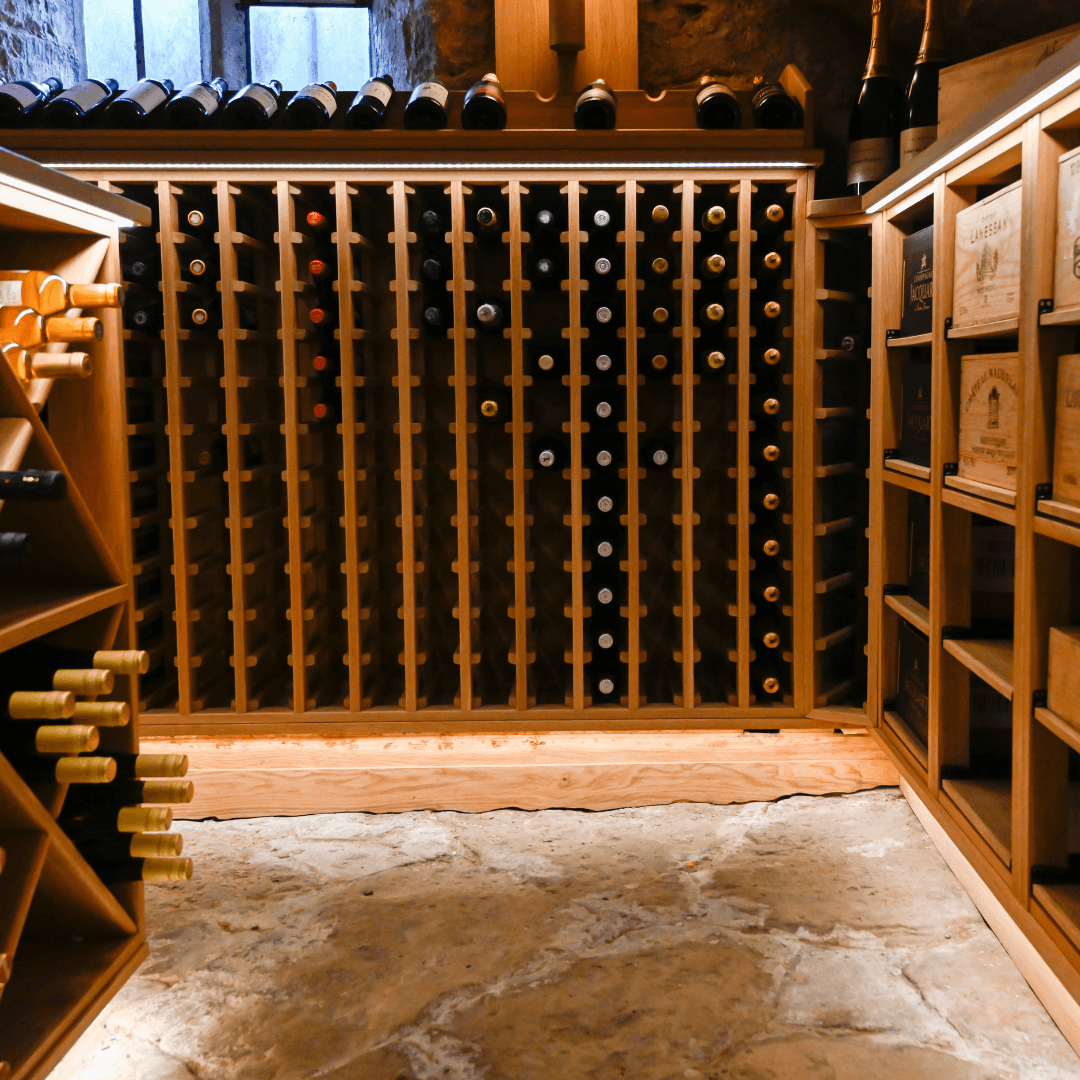
This wine cellar is located within the basement of a Grade II listed property. The client sought a solution that would deliver efficient, long-term storage while working within the constraints of the building’s heritage status. Sorrells was appointed to design a cellar that would feel embedded in the space, sensitive to its architectural character, while delivering practical functionality.
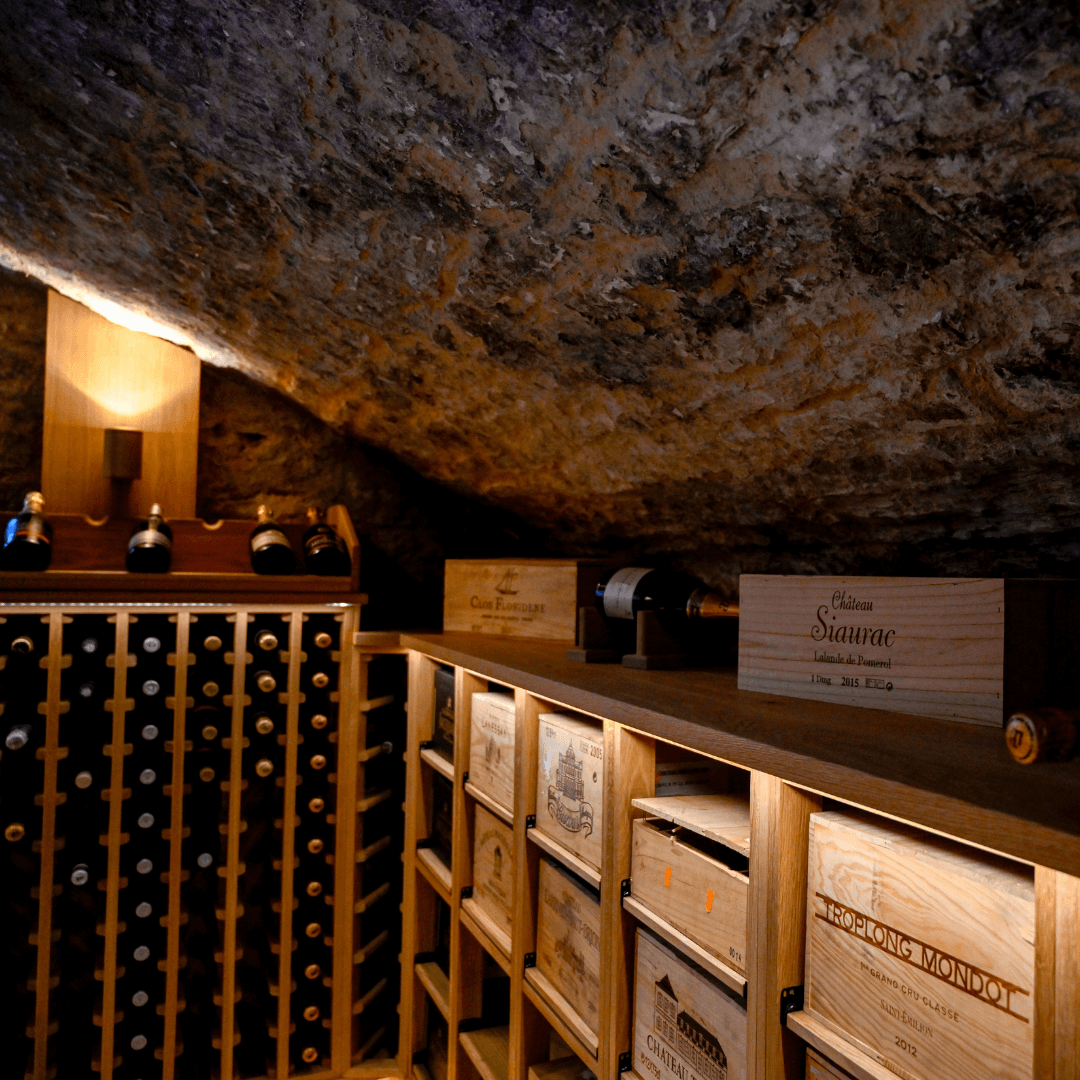
The project came with clear limitations: arched ceilings, exposed brickwork, and underground positioning all introduced structural challenges and preservation requirements. Rather than working against these features, the design embraces them, creating a cellar that reflects the building’s age and original character, while meeting the expectations of a modern wine collector.
The result is a robust, well-balanced space that offers both clarity of storage and a quiet nod to the history that surrounds it.
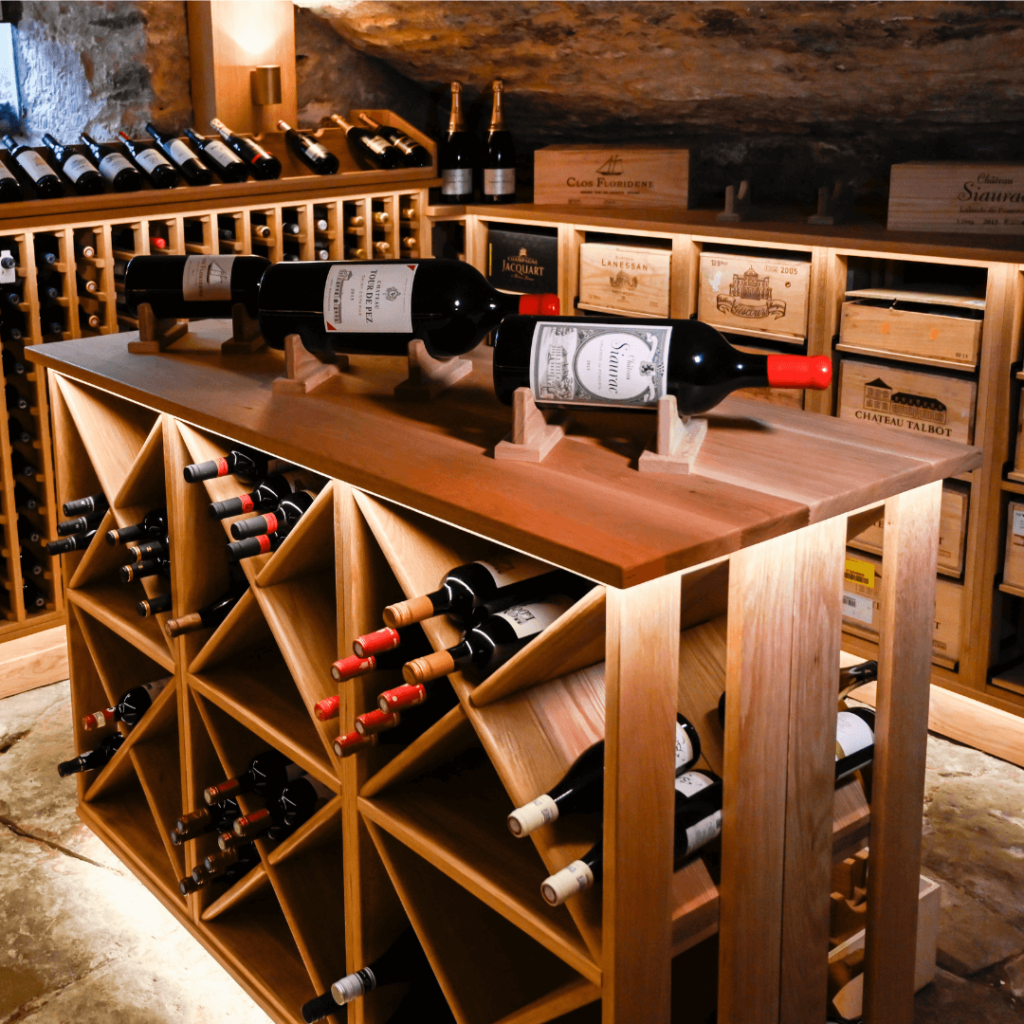
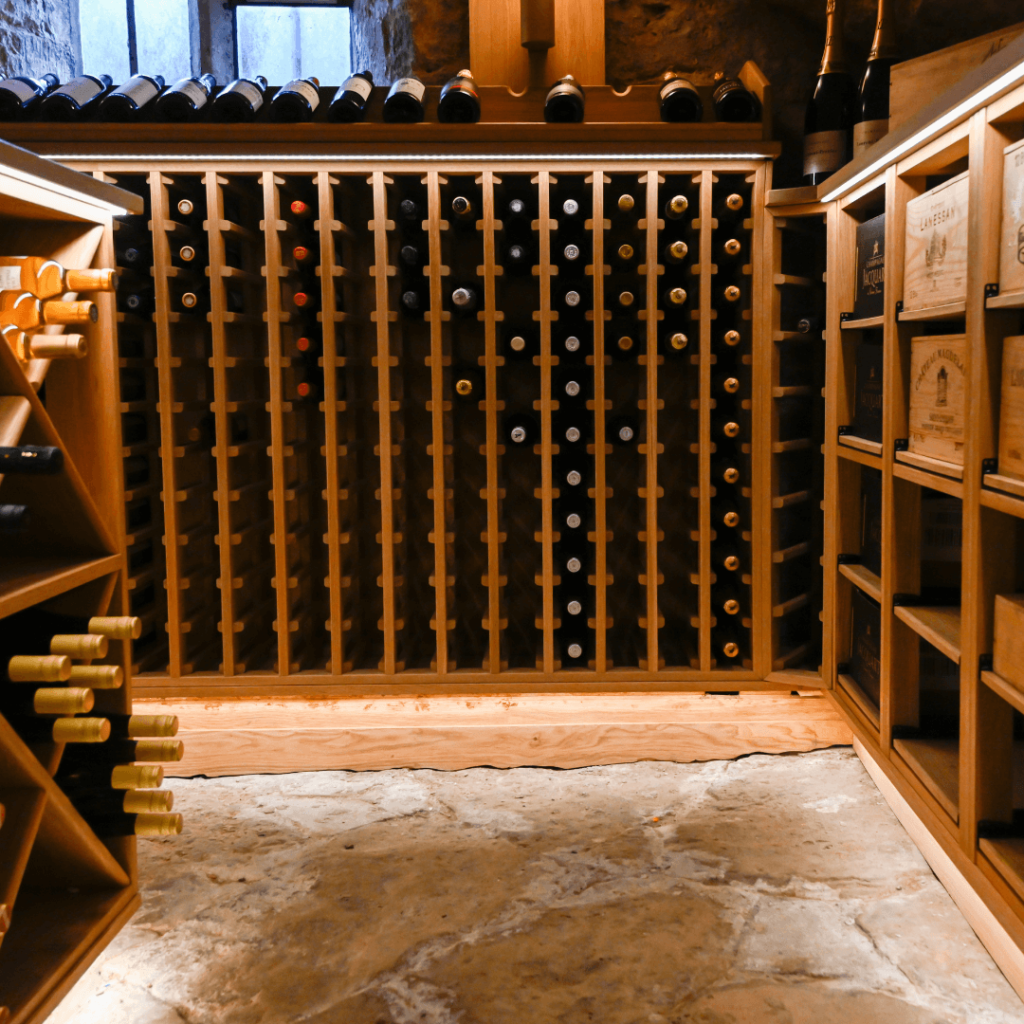
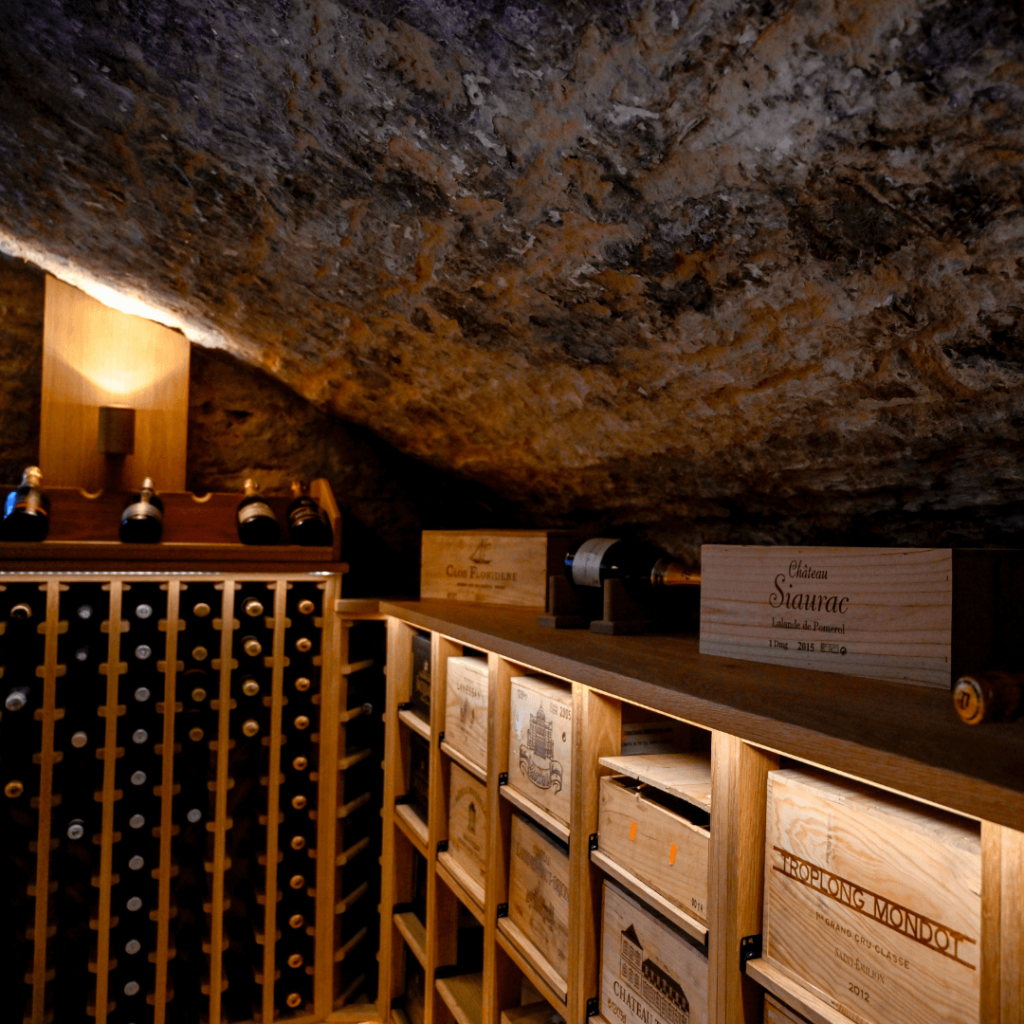
Bespoke joinery precision-cut to sit flush against original brickwork, respecting the building’s structure while achieving a seamless finish.
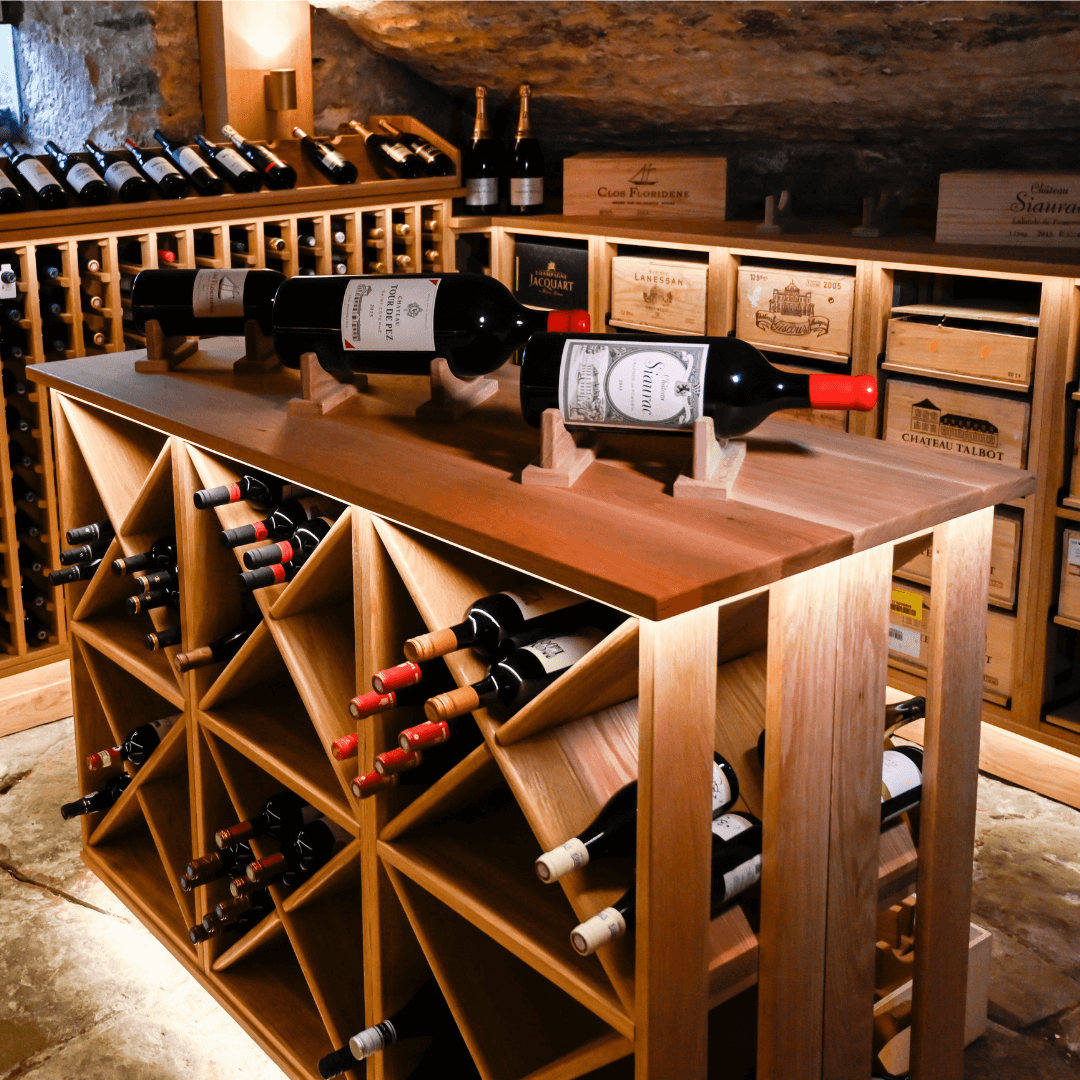
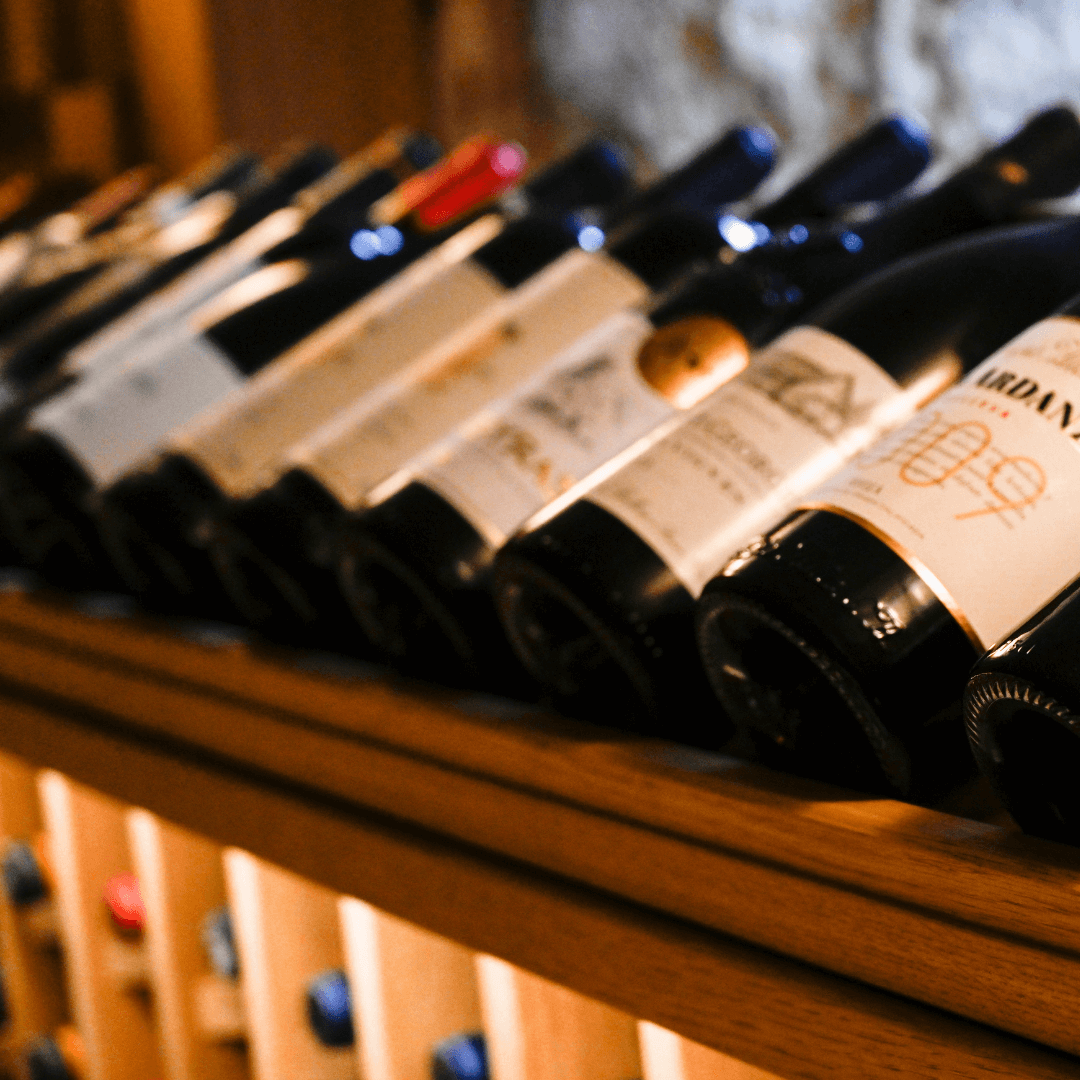
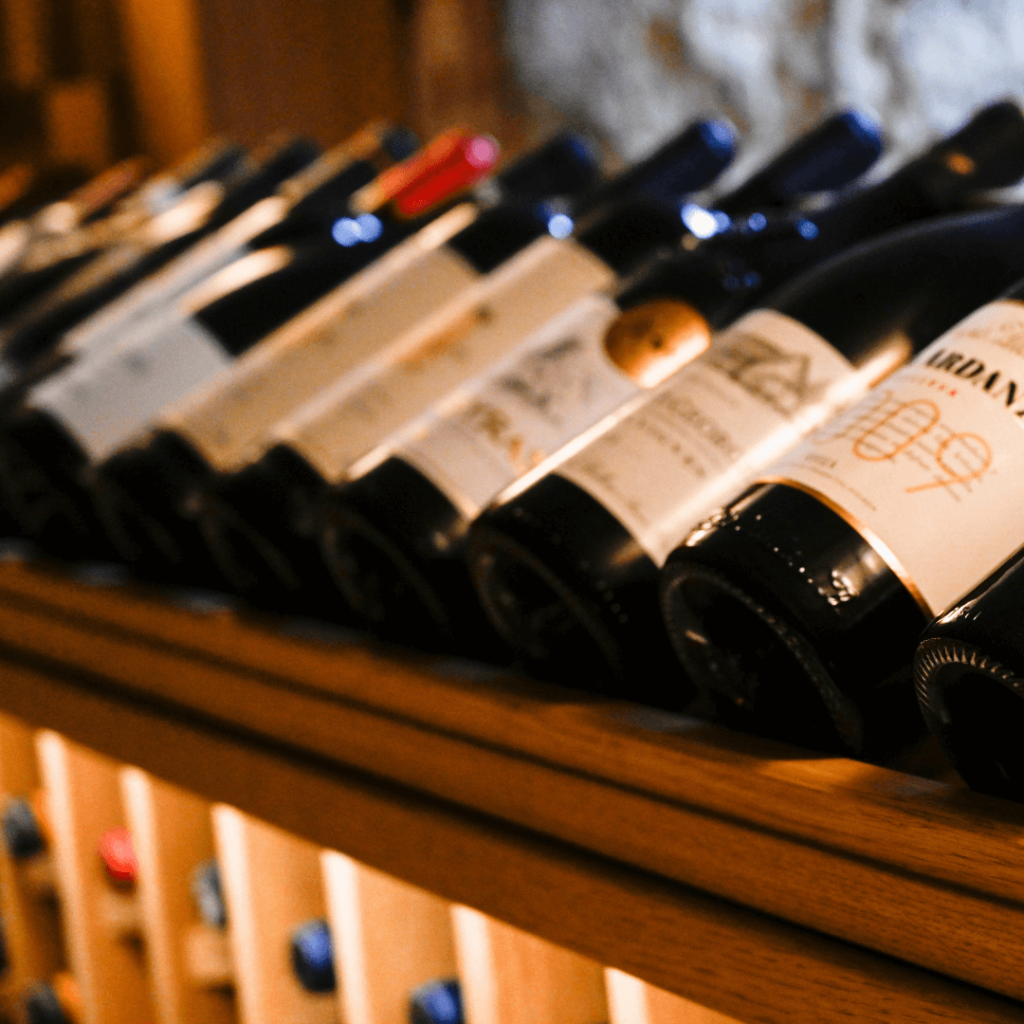
Angled display shelving positioned around the upper perimeter, designed to highlight key bottles and accommodate standout large formats.
Central tasting table offering additional storage and presentation, while serving as a focal point for hosting and interaction within the cellar.
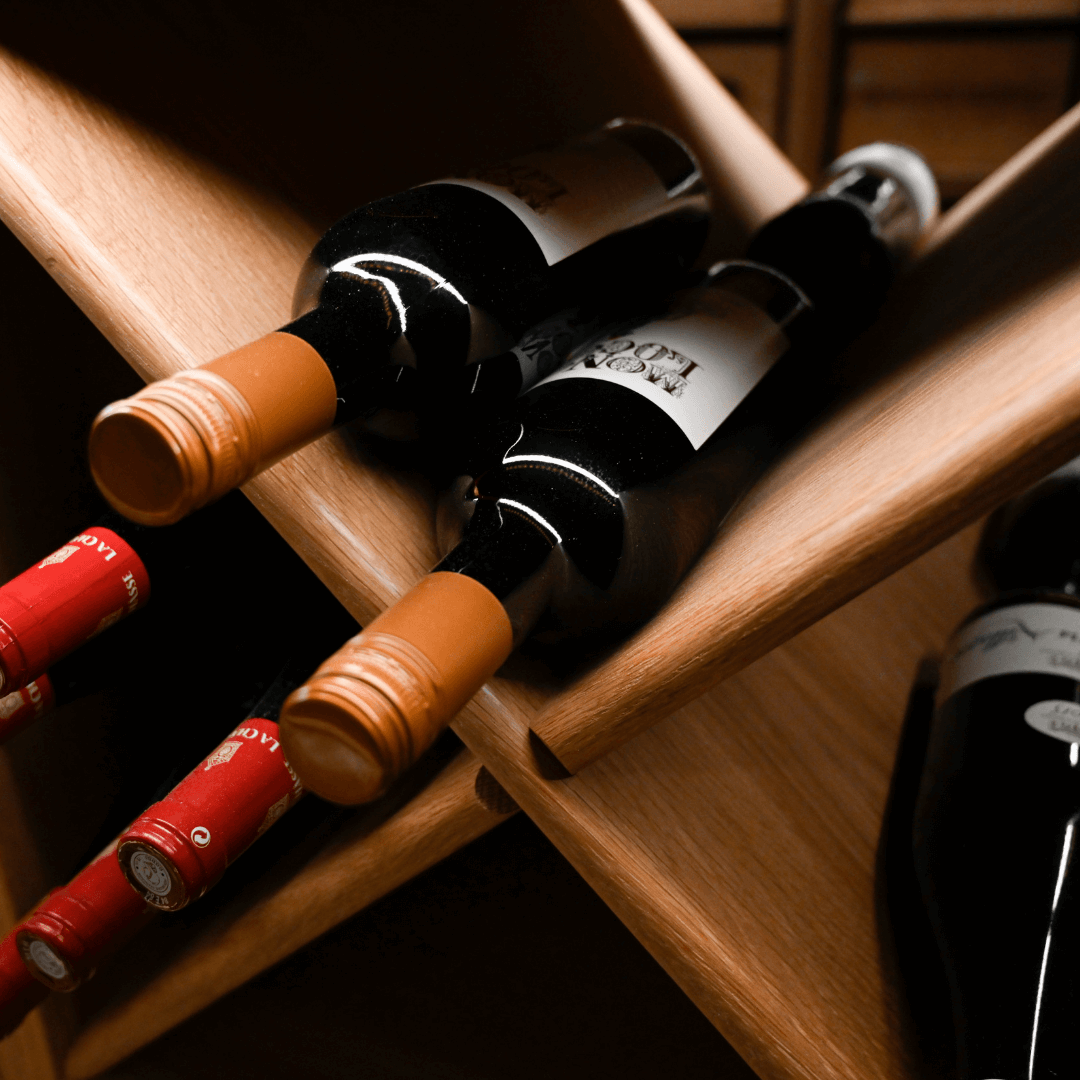
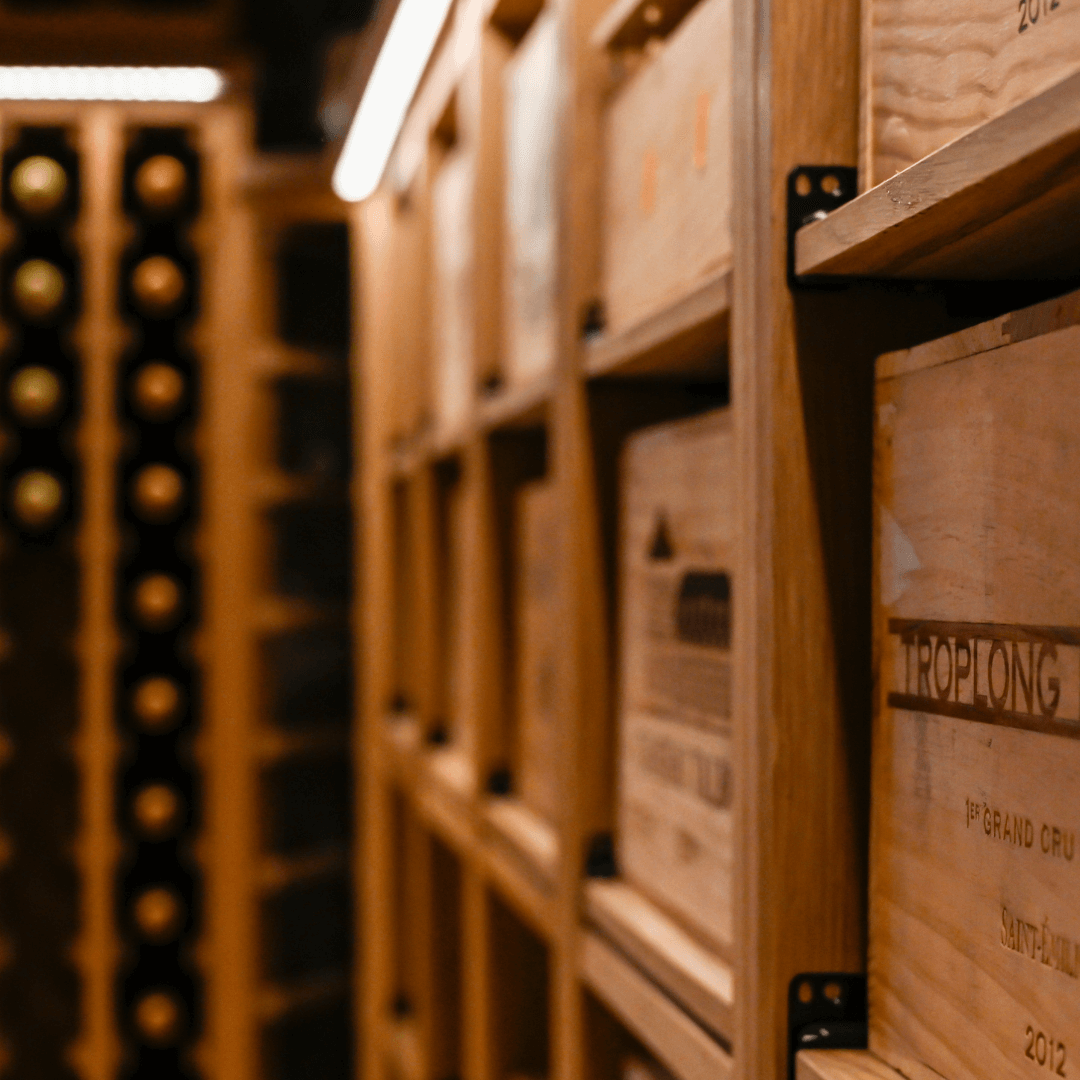
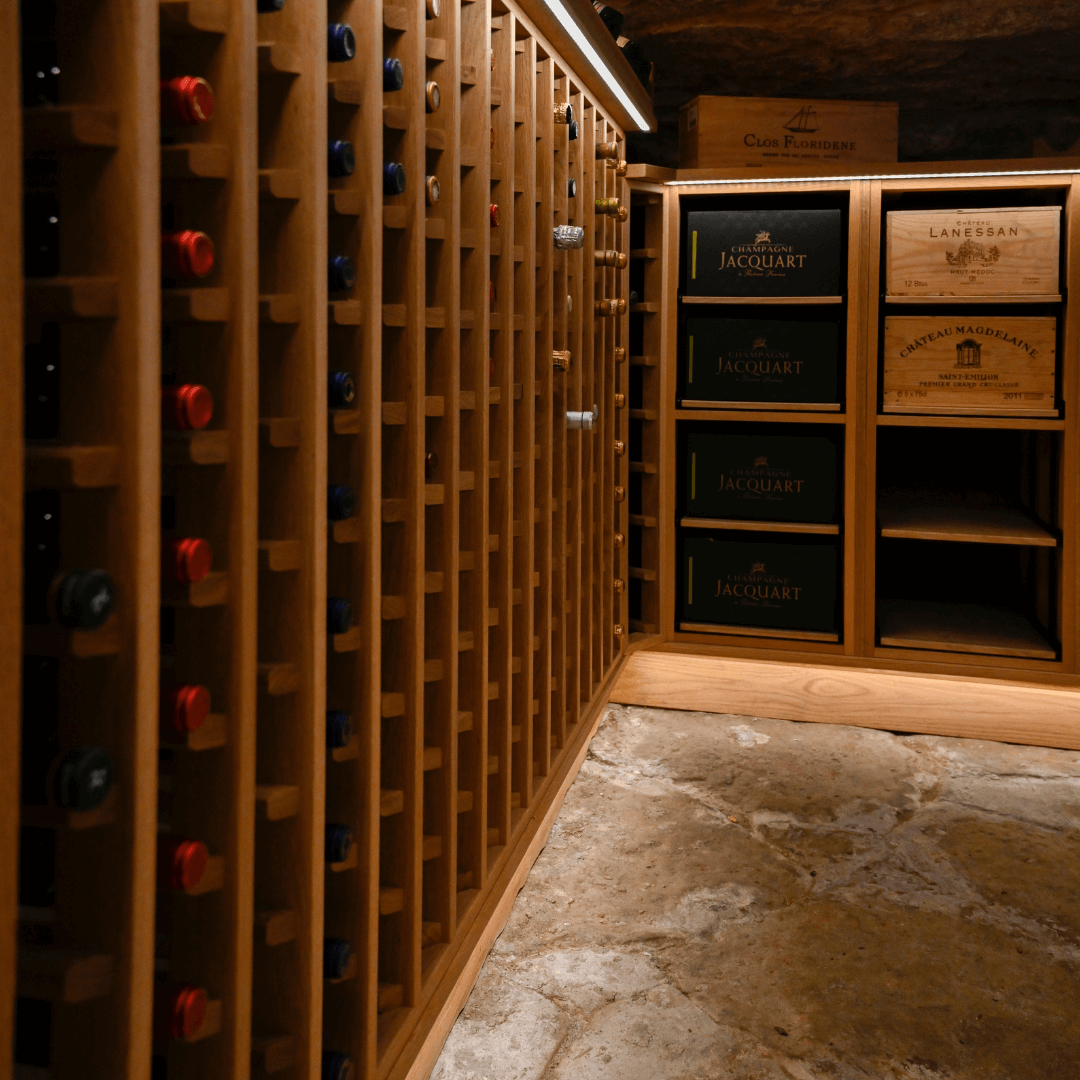
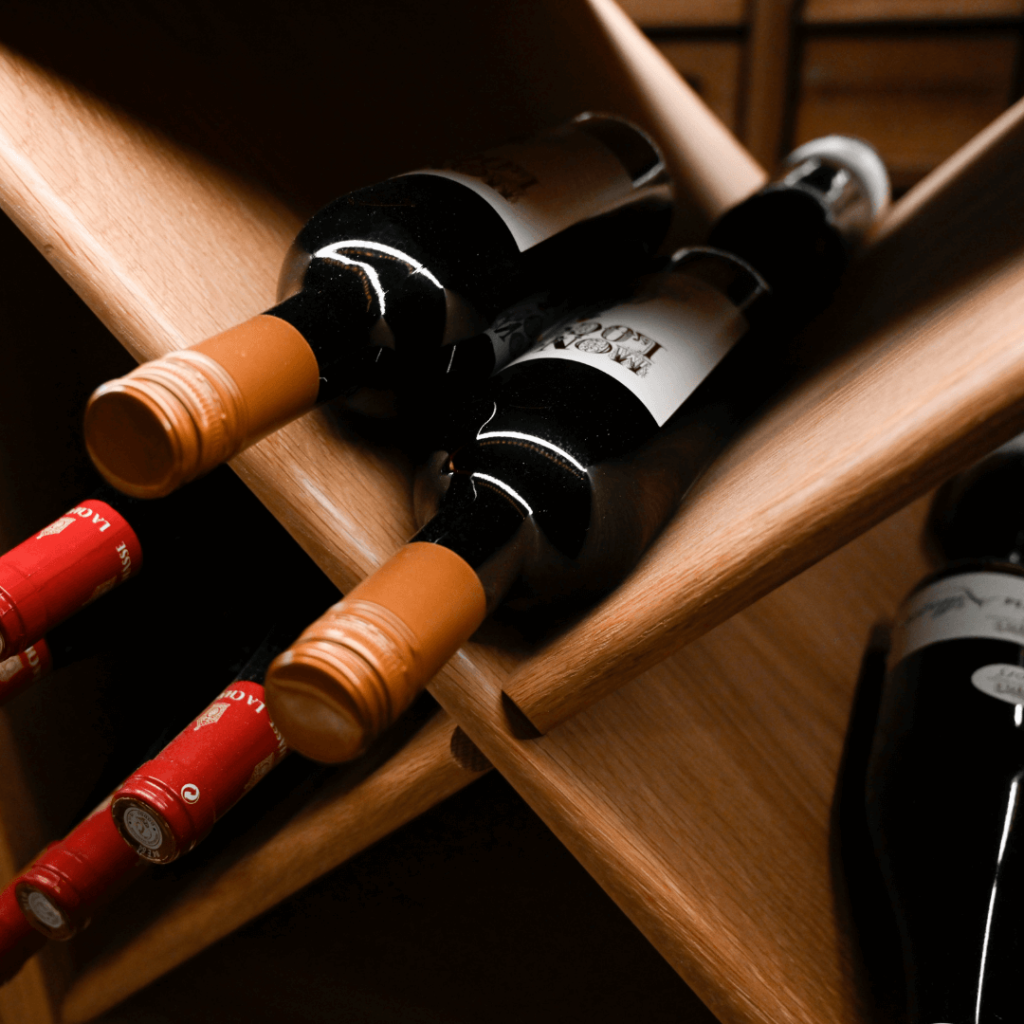
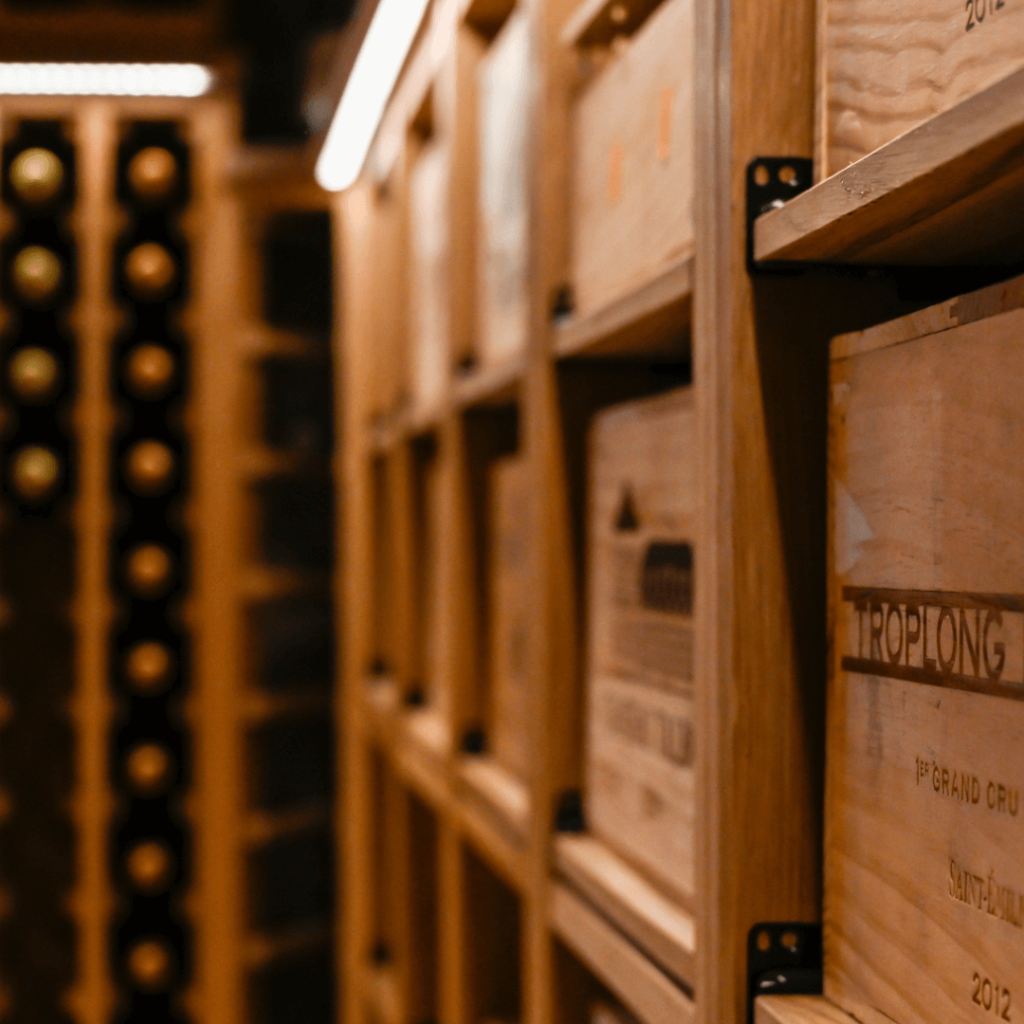
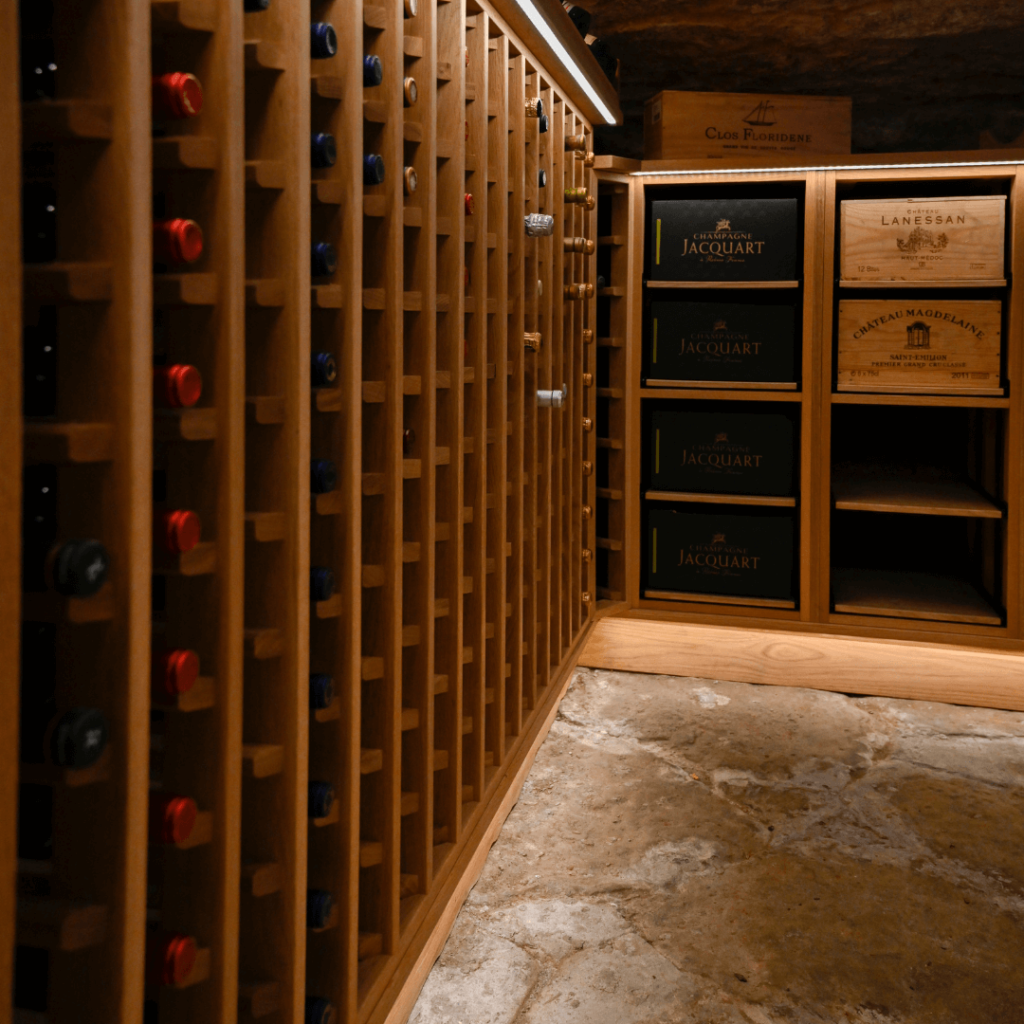
Constructed from solid oak, the joinery is finished in a warm, mid-tone stain to complement the original brickwork and arched ceiling of the Grade II listed space. The layout is structured around standard bottle racking, with a row of angled display shelves positioned along the upper perimeter, allowing key bottles to be highlighted and easily accessed.
The basement location of the cellar provides naturally cool and stable conditions, eliminating the need for a mechanical temperature control system. With limited natural light and consistent ambient temperatures, the space supports long-term storage without intervention, an advantage that was carefully factored into the design approach.
A central oak tasting table offers additional storage and serves as a focal point within the room. It provides a practical surface for organising or presenting wine, while also offering a place to display the client’s large-format bottles, including Balthazars and Salmanazars.
Scallop racking was integrated along narrow wall sections to maximise bottle capacity in tighter zones, while maintaining clean lines and clear label visibility. The joinery was precision-cut to sit flush against the exposed brickwork, ensuring the installation feels embedded in the space rather than added onto it.
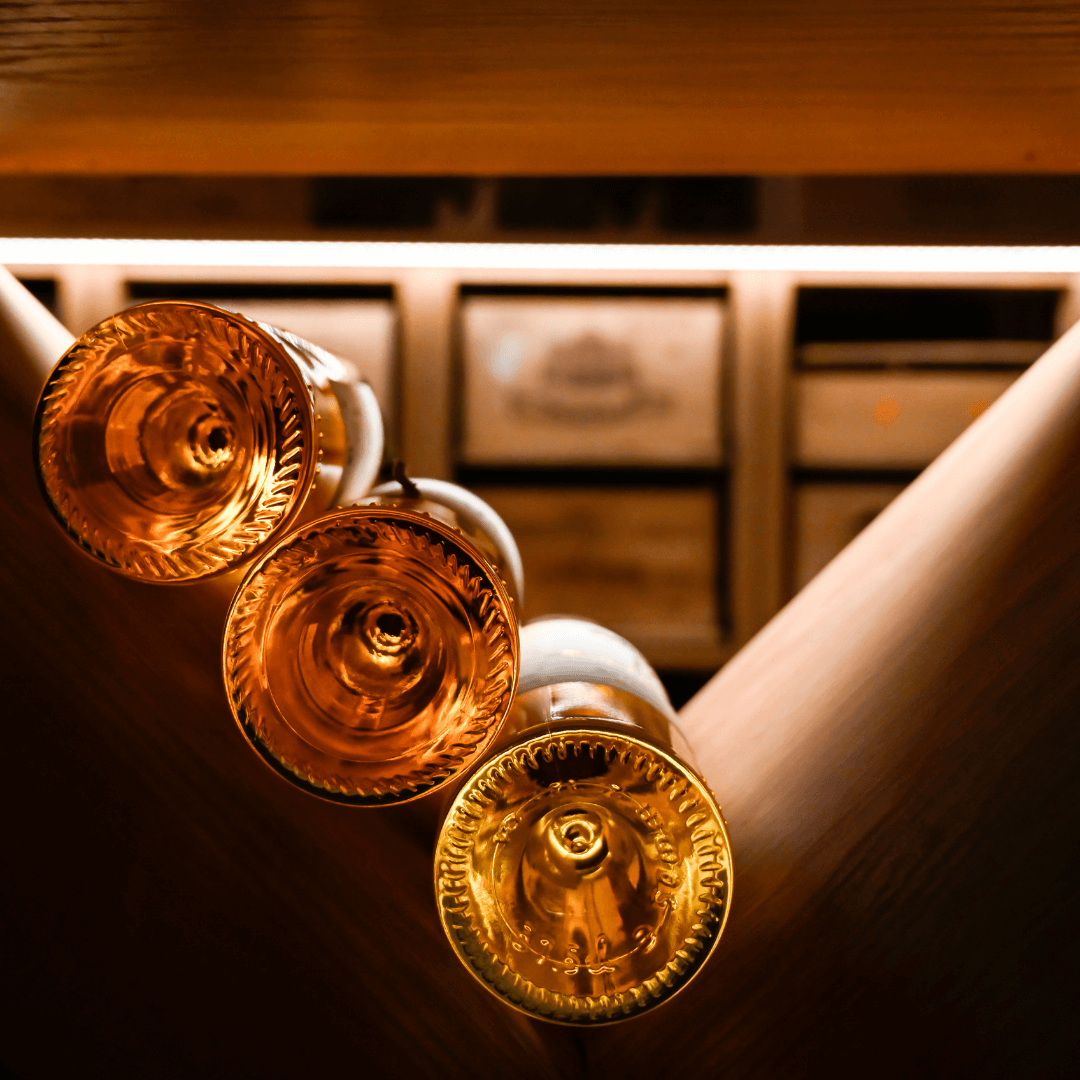
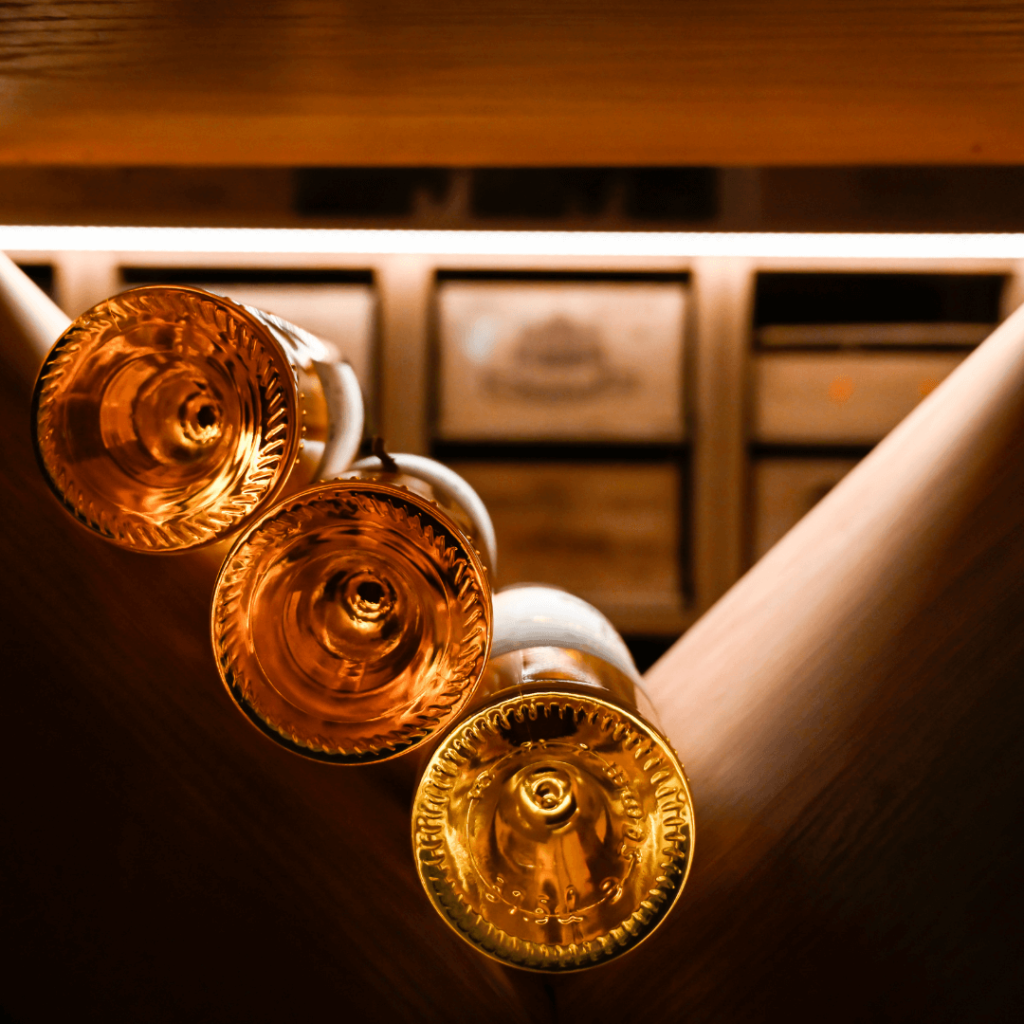
Soft LED lighting runs throughout the cellar, providing ambient illumination that allows for practical use while preserving the cellar’s cool environment and heritage feel.
This cellar is a clear example of how Sorrells designs with both architecture and collection in mind, delivering wine storage that works with the space, not against it.