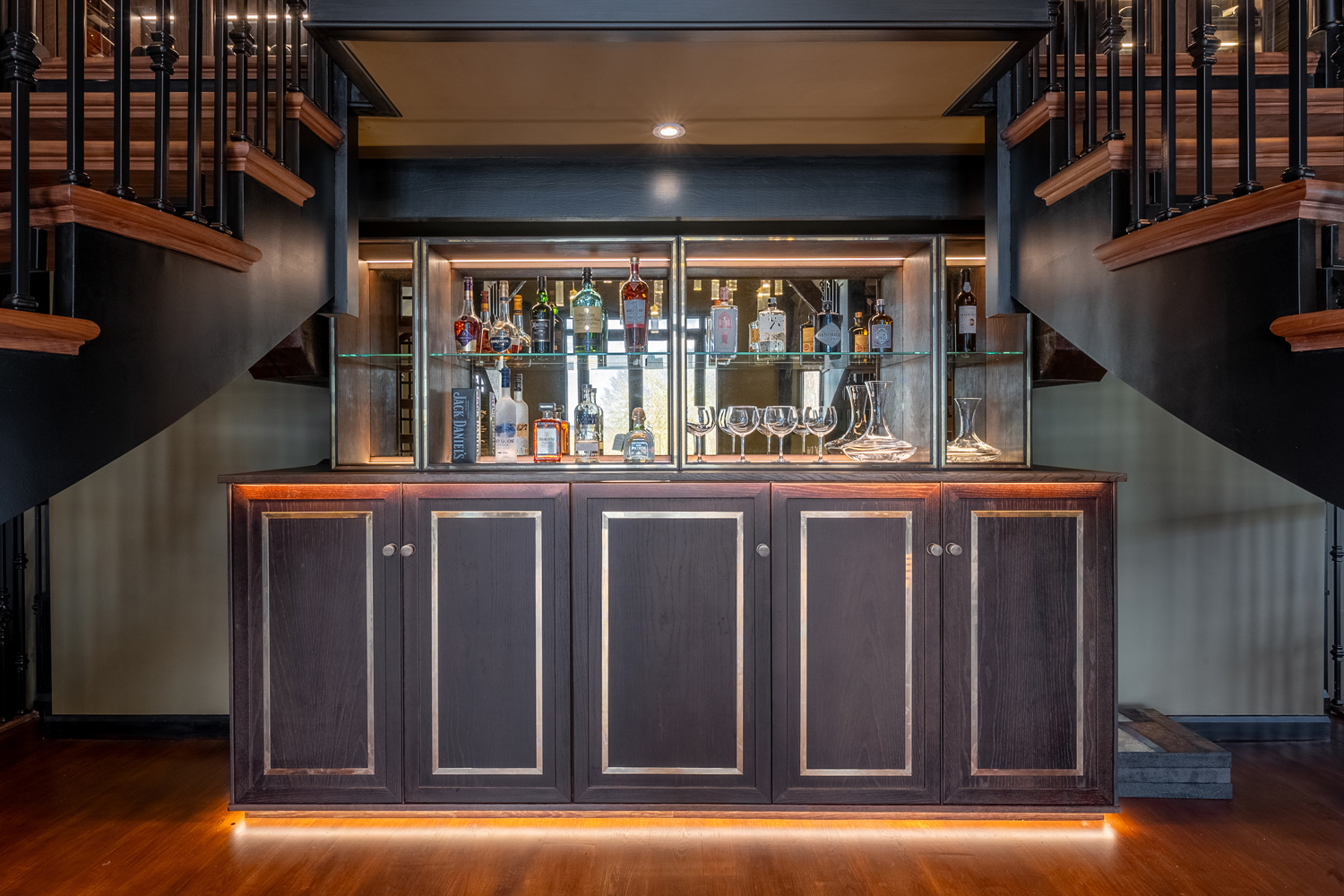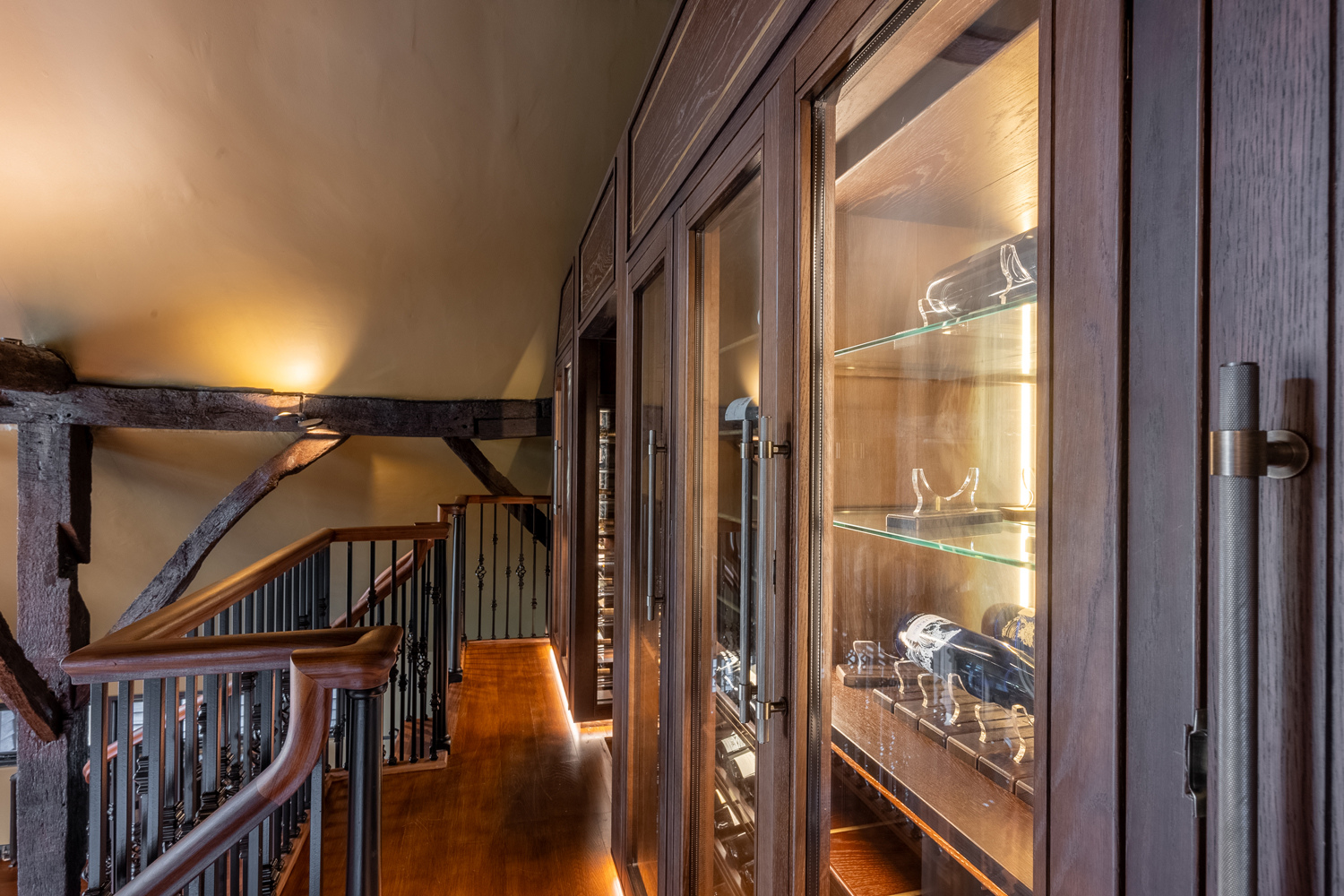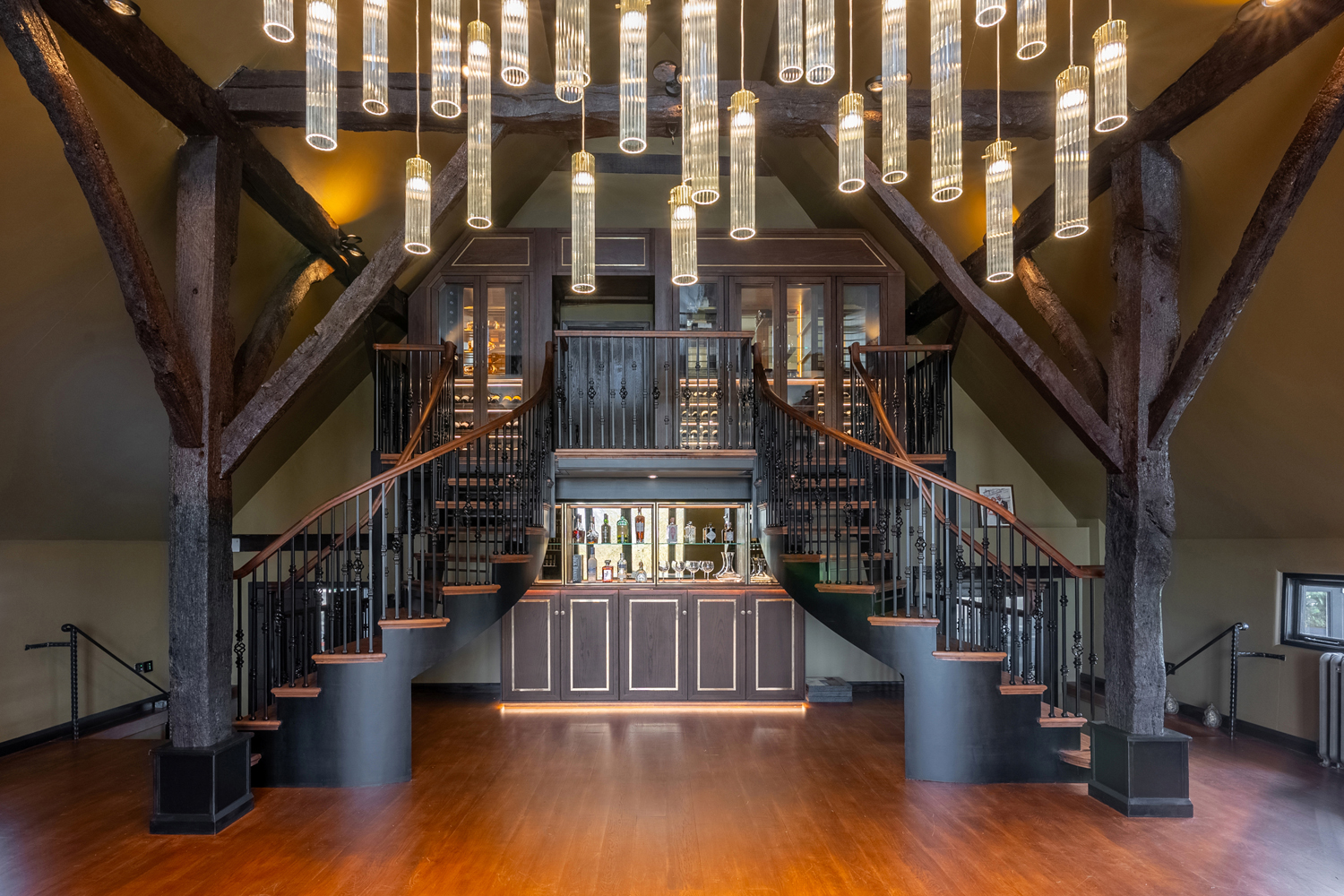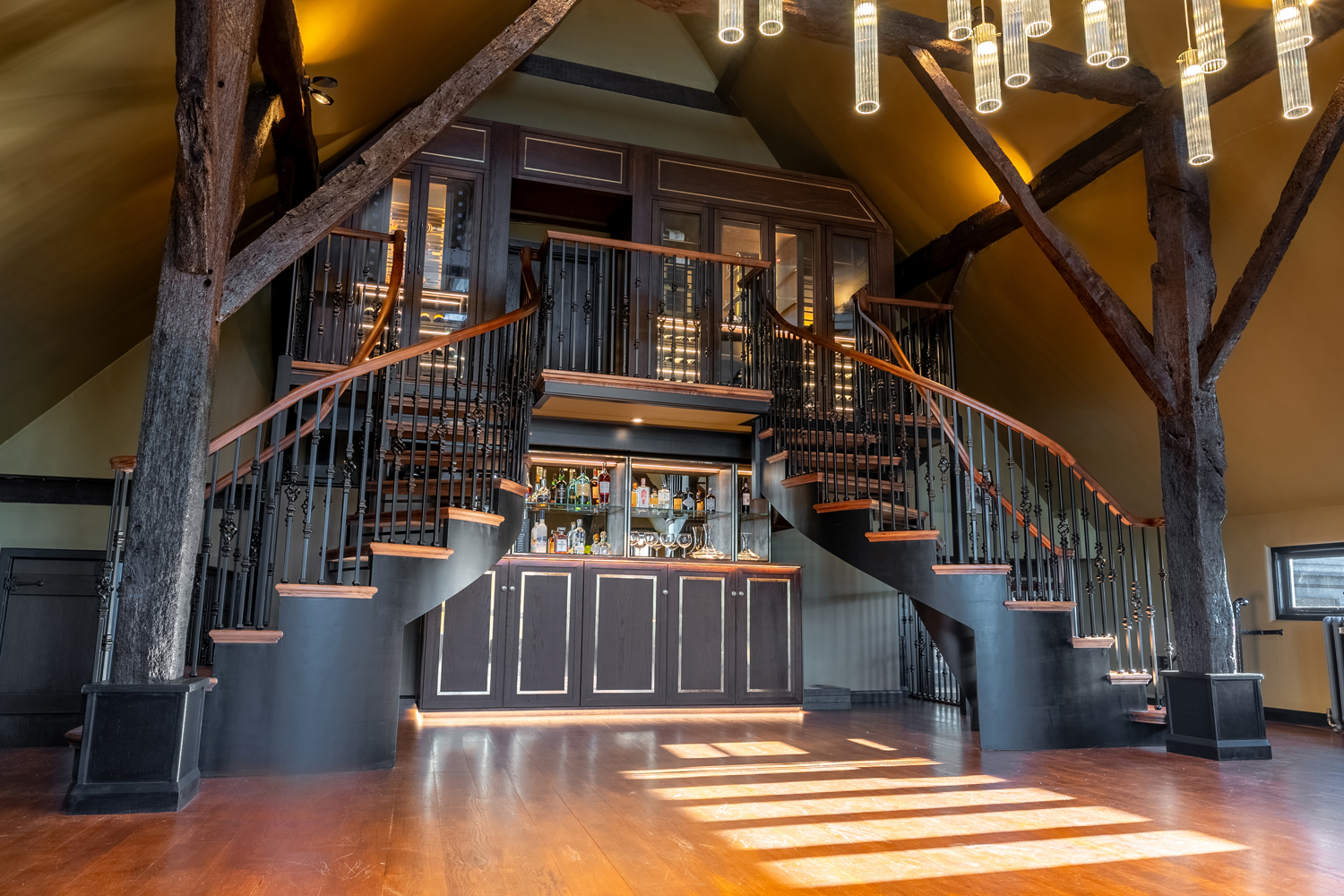
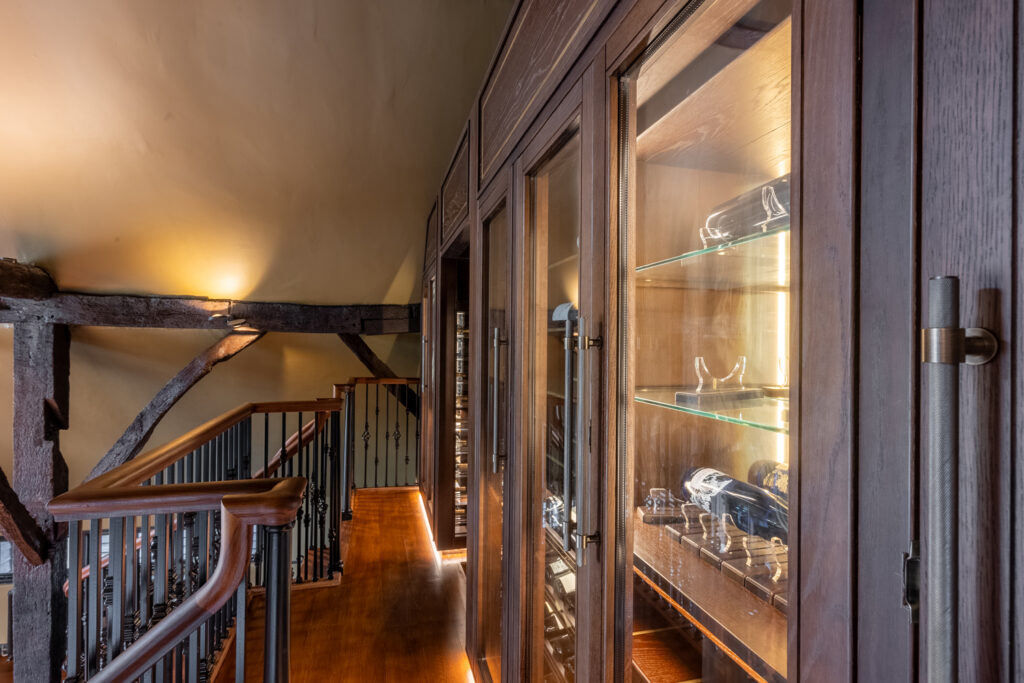
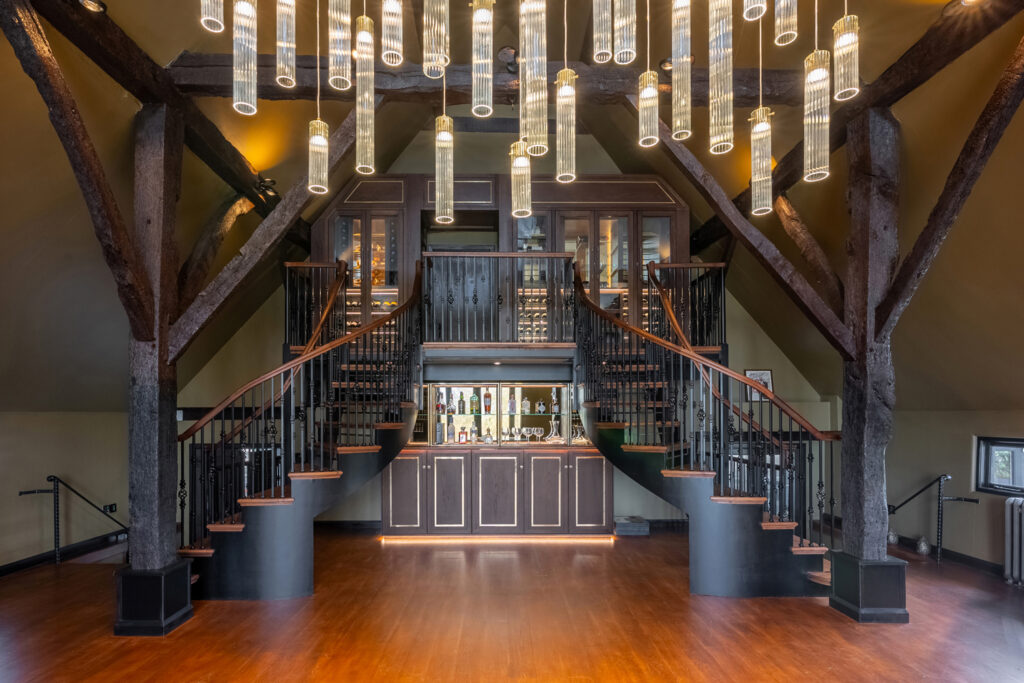
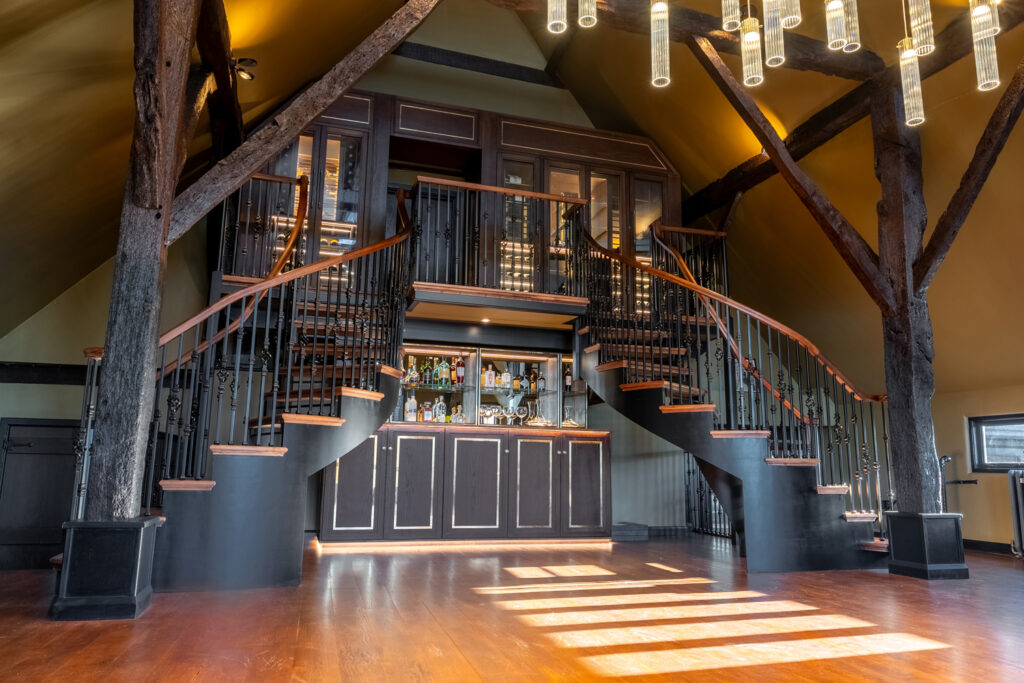
This project involved the design and installation of a bespoke, double-story home bar and wine wall for a private residence in Essex. The client required a solution that would respect the property’s rustic character while transforming an underused area into a new space to socialise and entertain. The lower ground level provides a home bar for informal gatherings, while the upper level houses temperature-controlled cabinets designed for long-term fine wine storage.
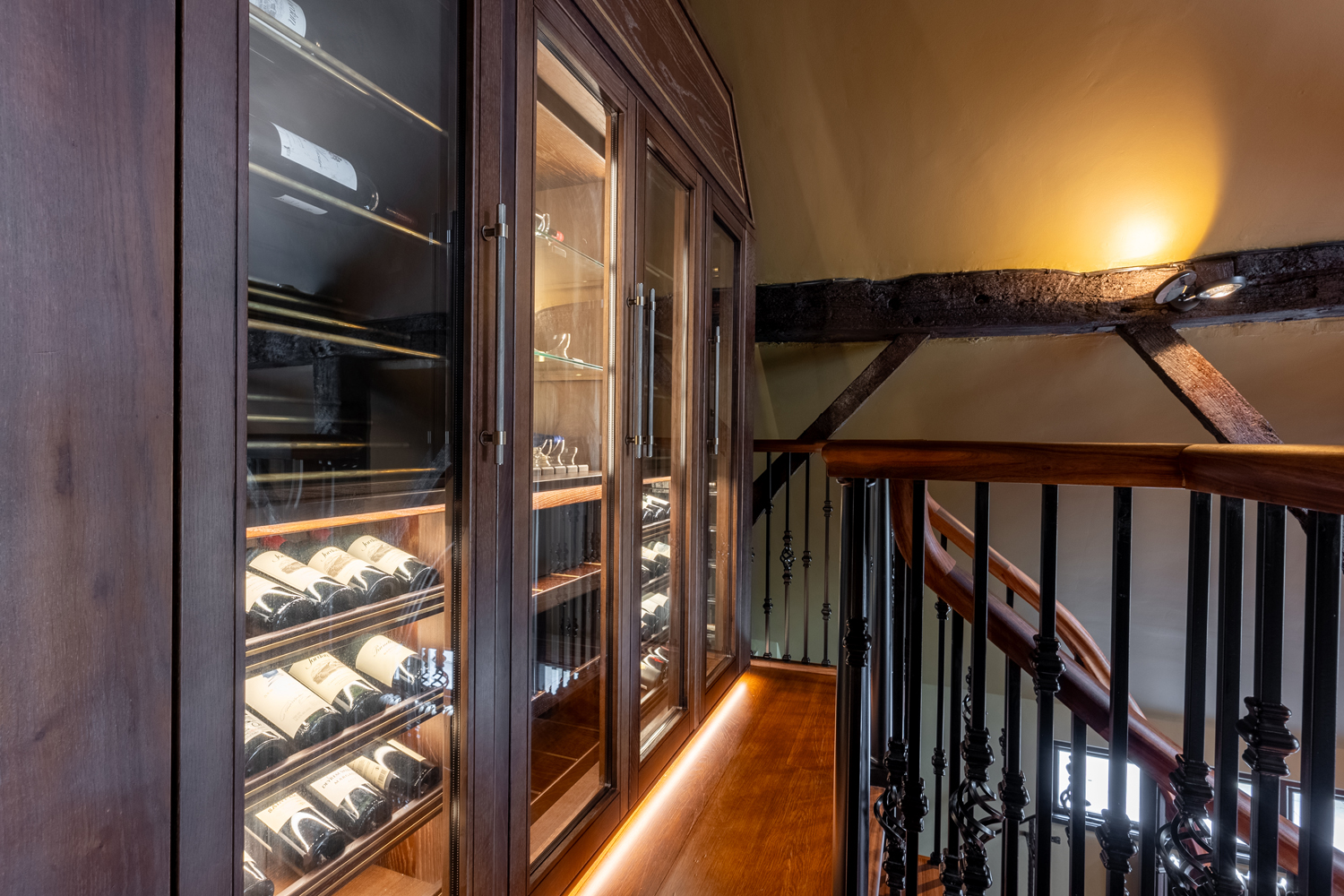
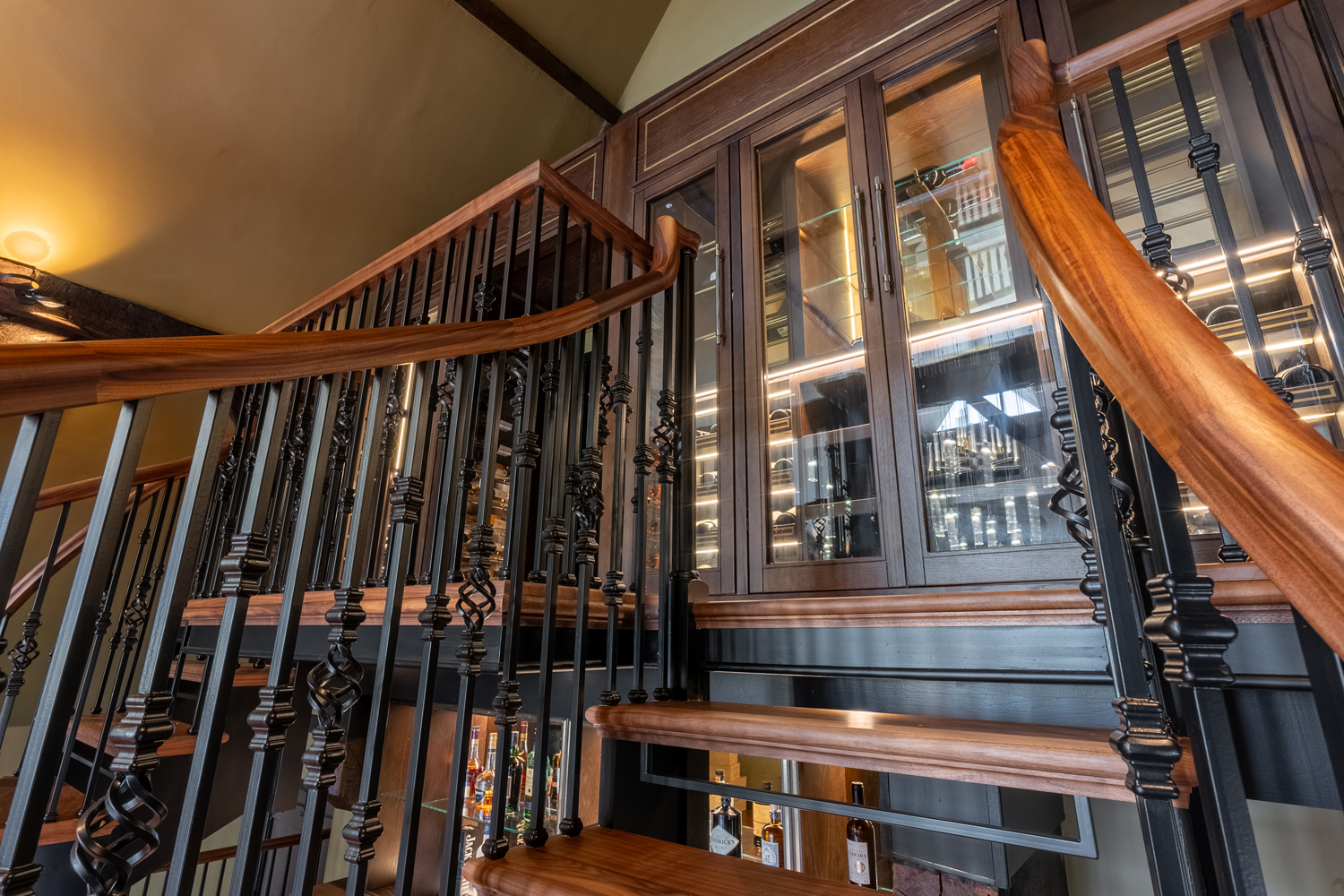
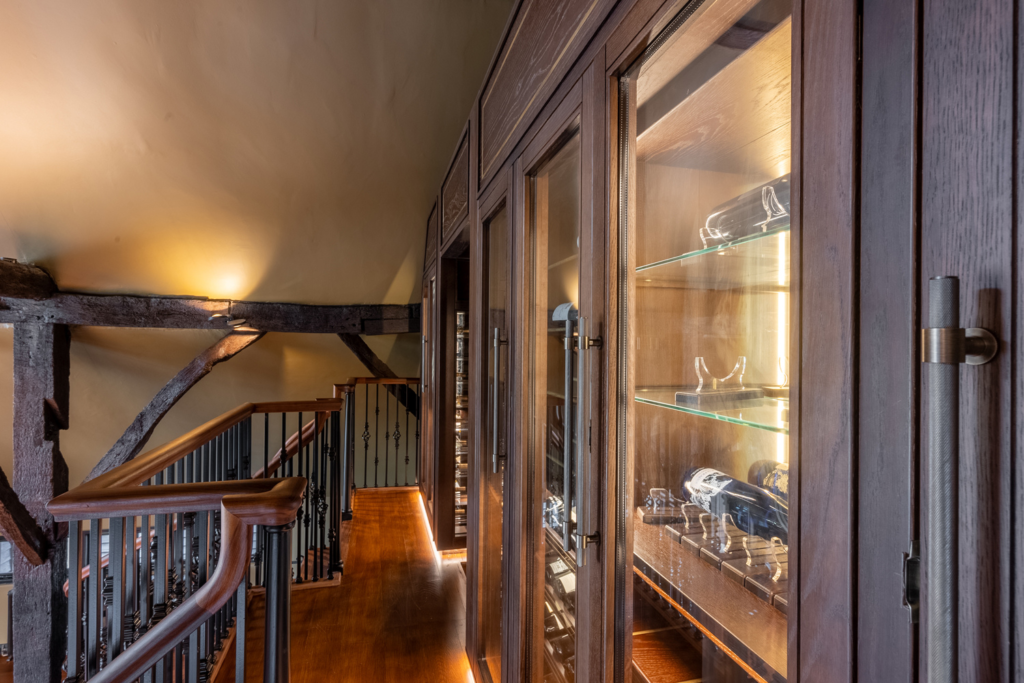
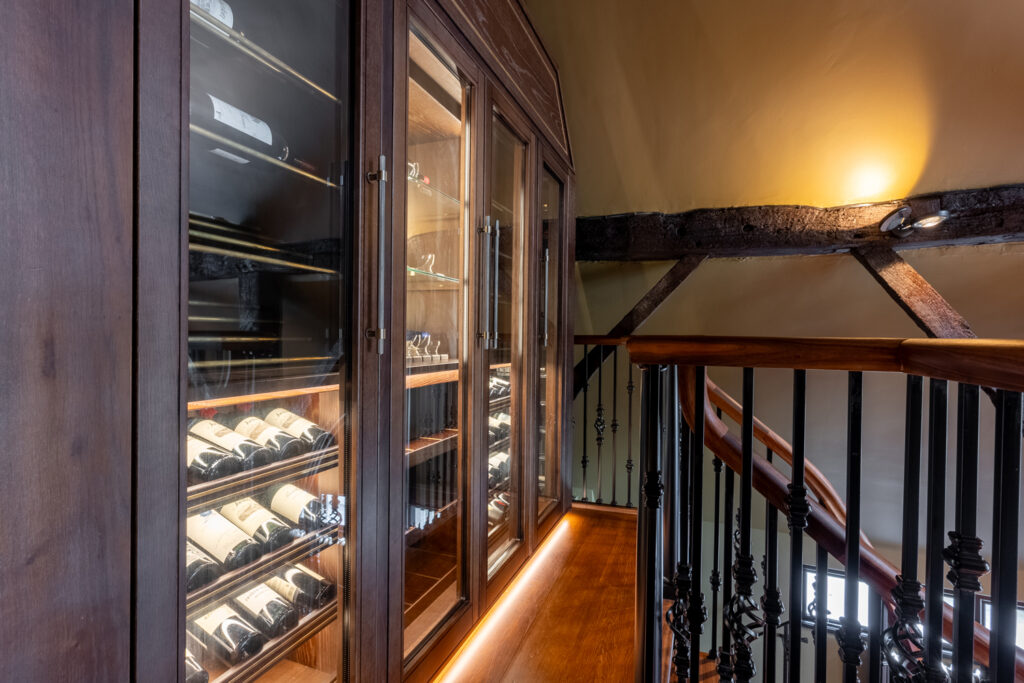
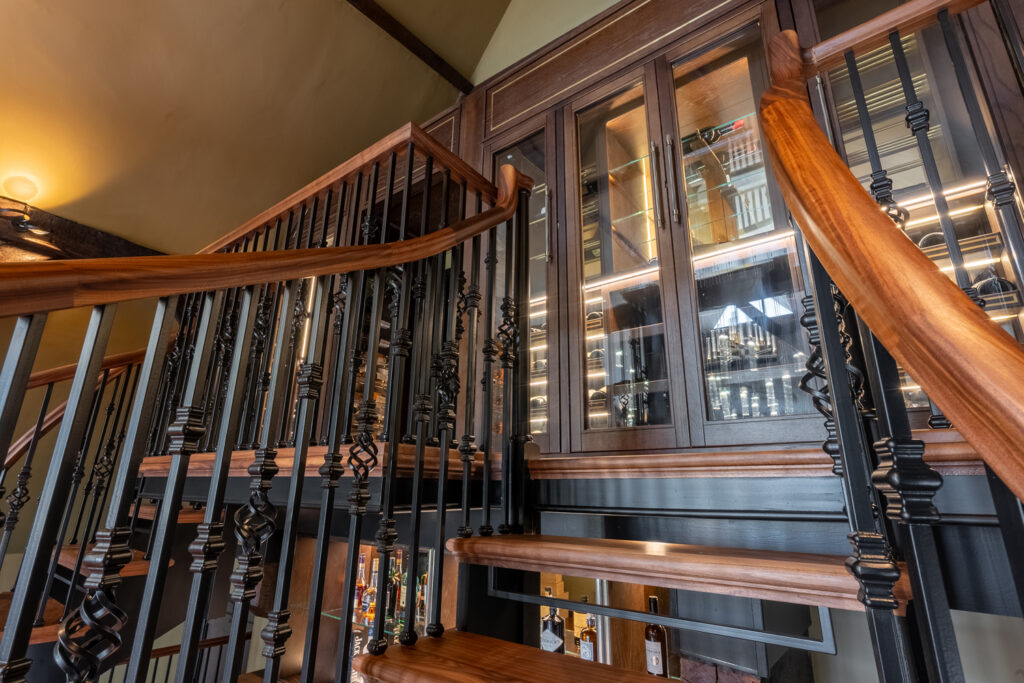
In this project, the angled scallop racking was designed as a visual feature to complement the wider scheme. Where Sorrells typically uses solid oak for this style of racking, we opted for bronze rods to harmonise with the bronze inlay, ironmongery, and other detailing throughout the bar and wine wall. The angled scallop configuration allows each bottle to be displayed label-forward while enabling efficient storage of up to three bottles deep per row.
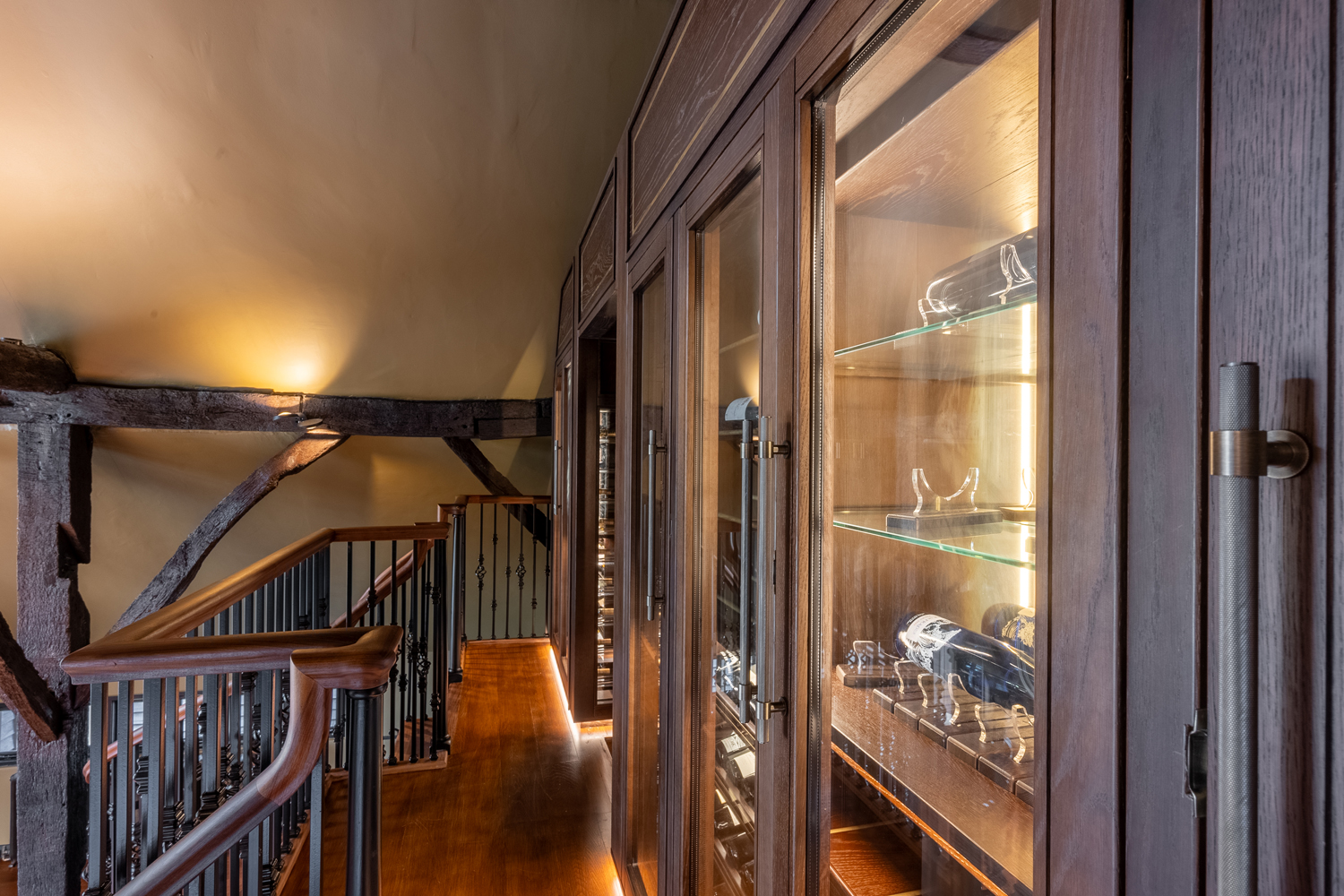
The temperature control system plays an essential role in this installation. A discreet ceiling-mounted, water-cooled unit is integrated into the upper level cabinetry, maintaining optimal conditions for long-term fine wine storage. While the lower level of this project is designed for socialising and display, the upper level provides a dedicated environment for proper storage, preserving wine at a consistent temperature and humidity. The cooling system is carefully concealed to ensure it does not disrupt the clean lines and cohesive design, delivering both function and an unobtrusive aesthetic.
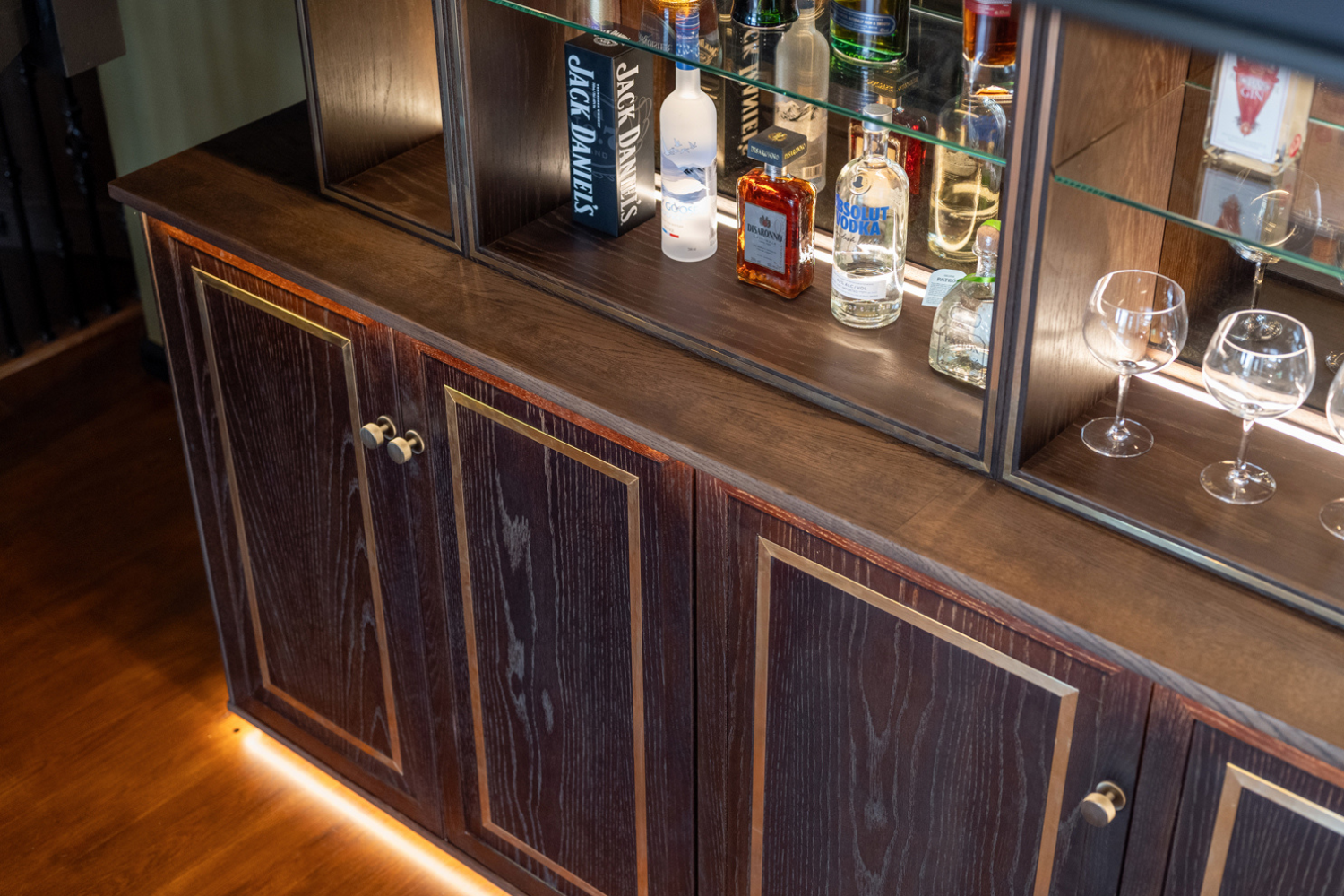
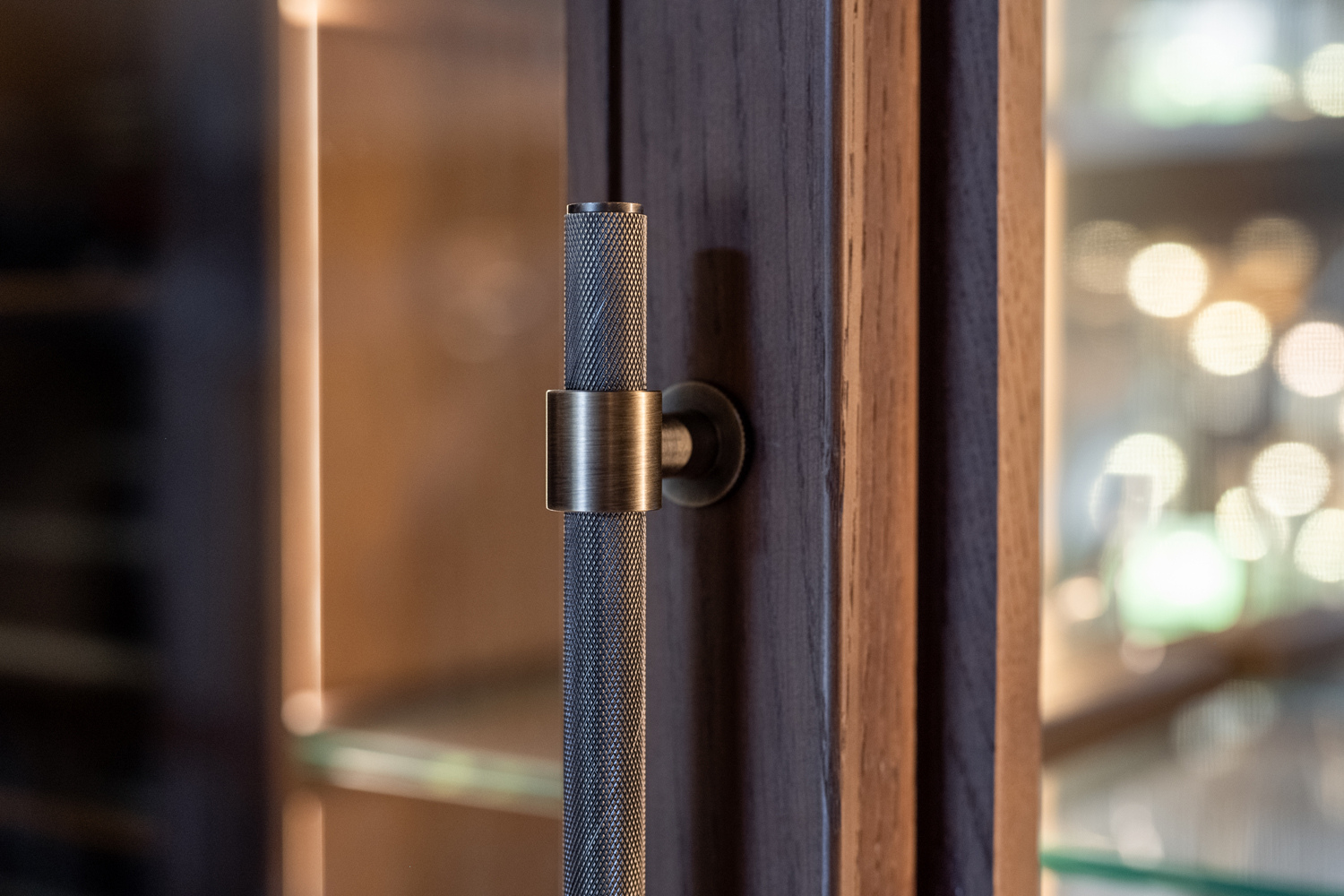
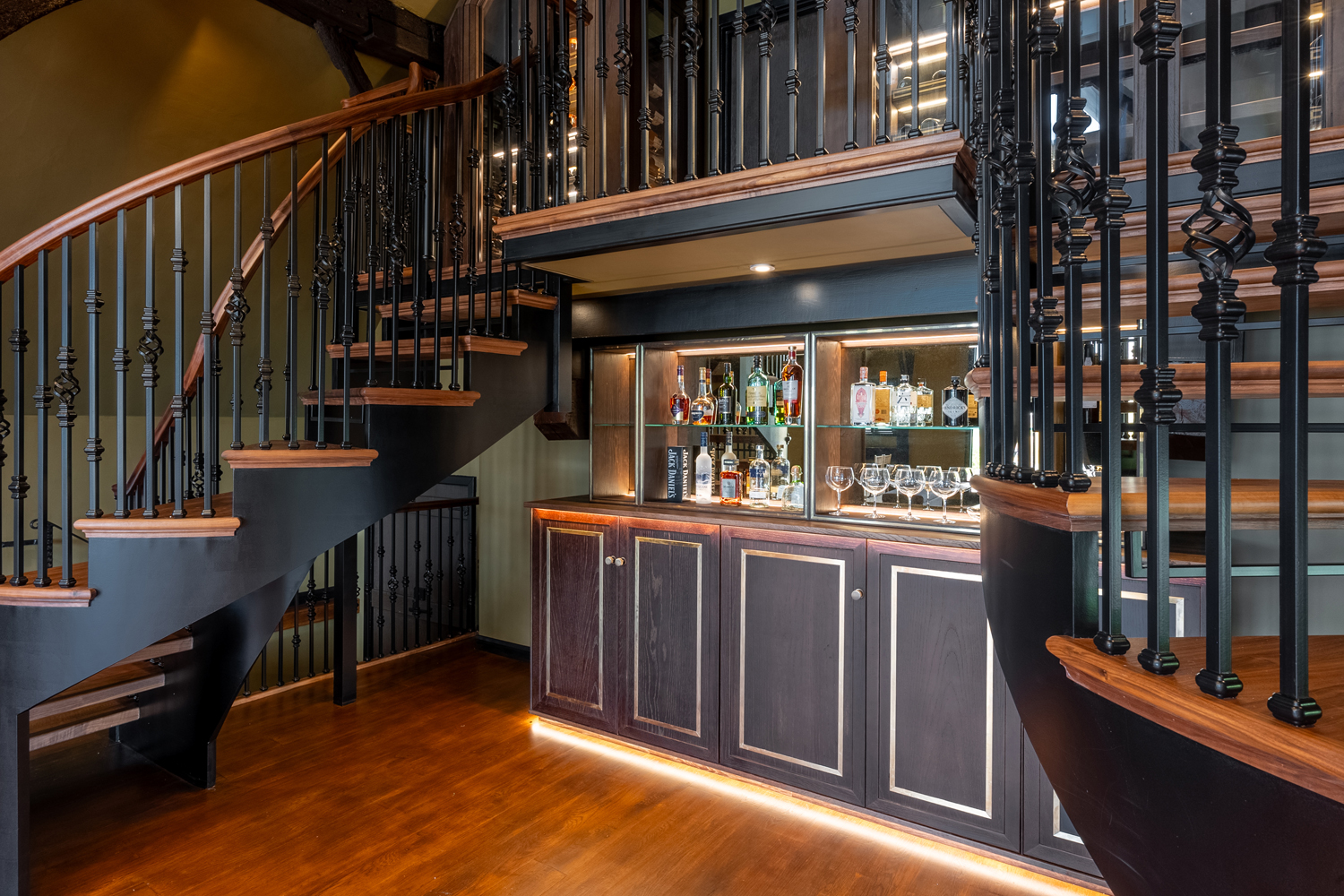
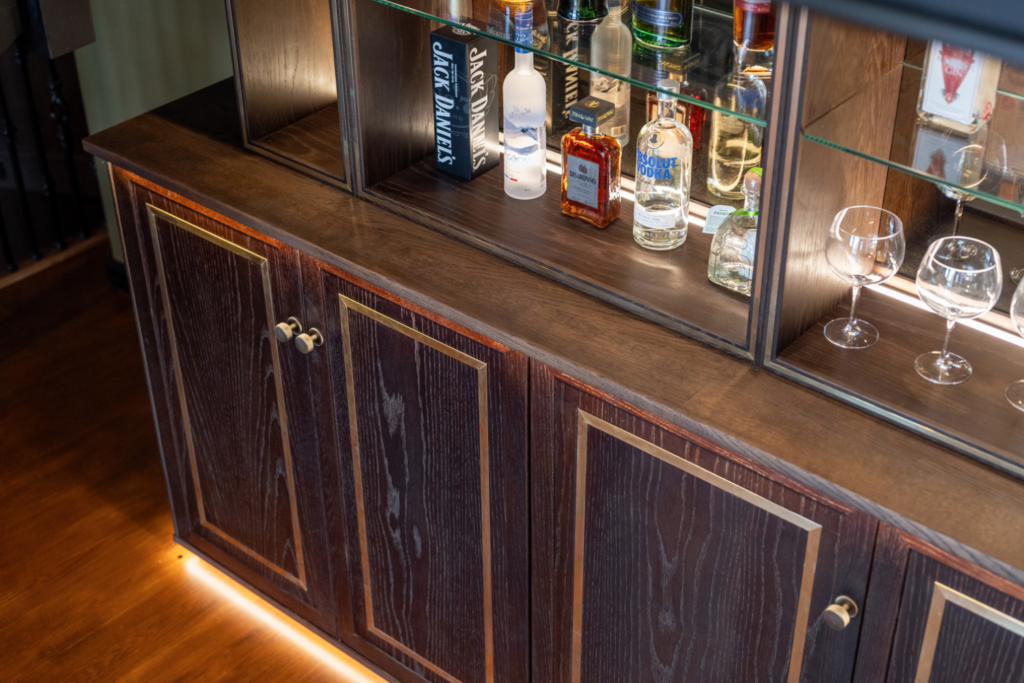
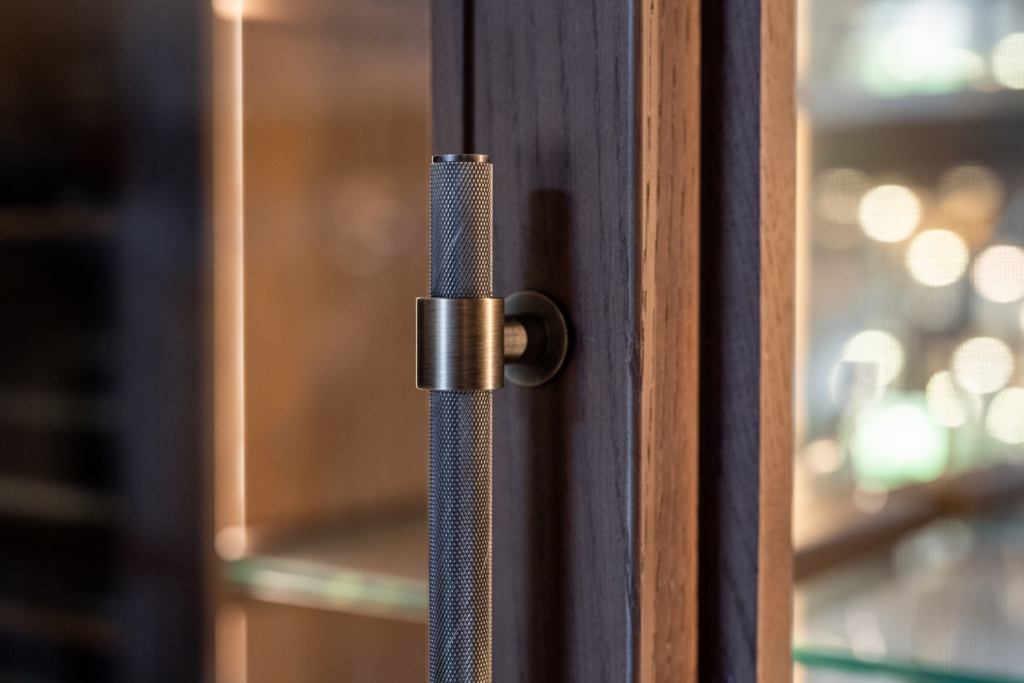
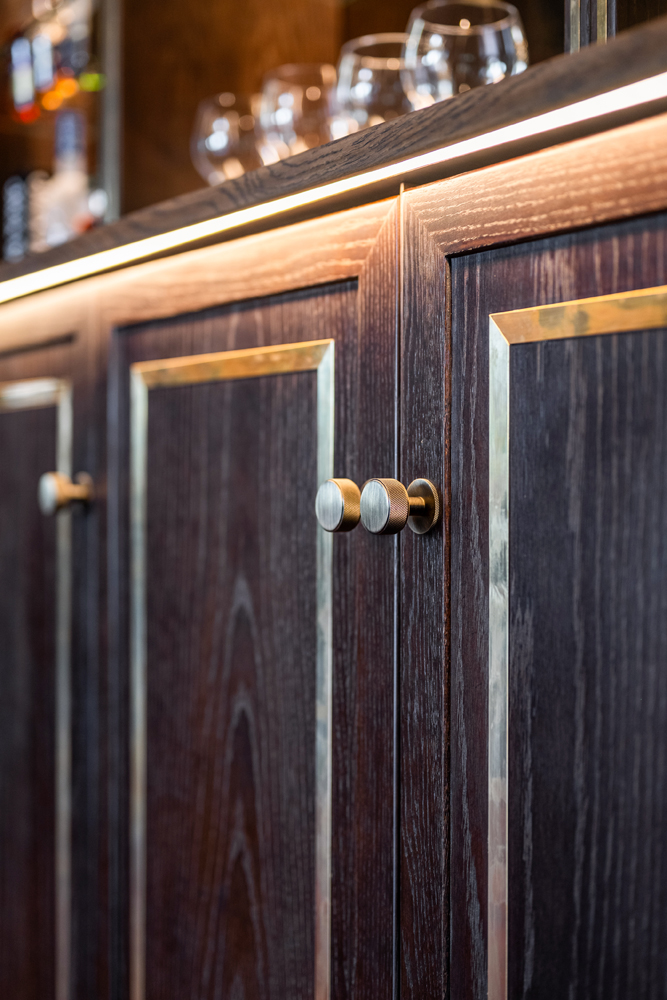
The design features dark hues to complement the property’s existing interior and exposed beams. As a striking yet neutral contrast, bronze detailing has been used throughout the installation to add refinement without overpowering the space. A notable feature is the bronze inlay detailing on the cabinetry doors and plinths, providing subtle highlights that draw the eye while maintaining overall cohesion. Bronze has also been used for the door handles and ironmongery, introducing consistent, understated touches that tie the entire scheme together.
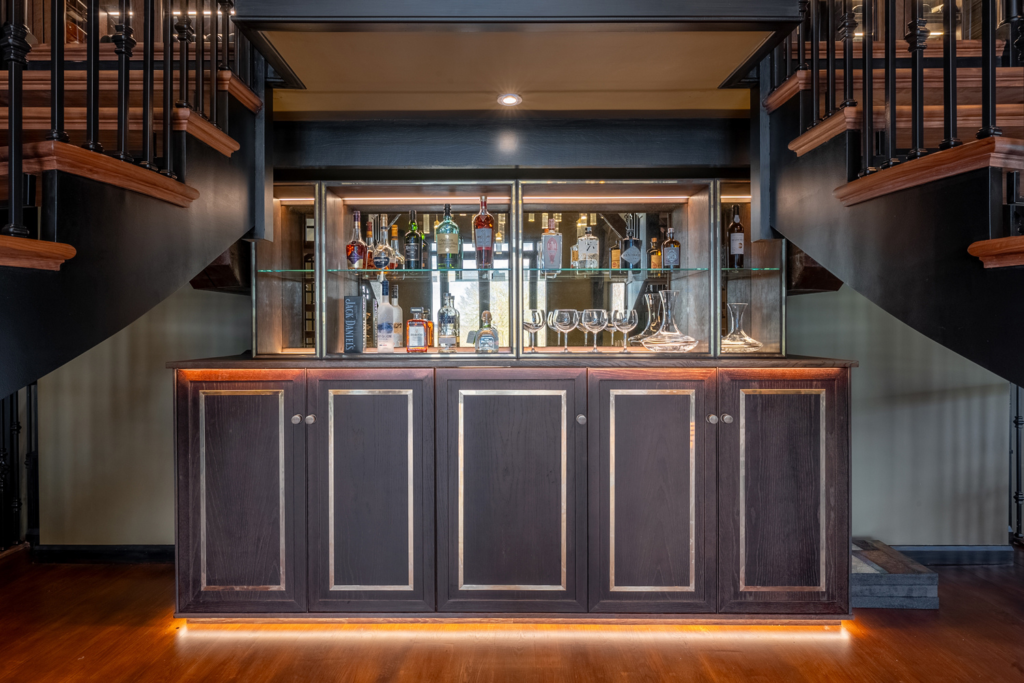
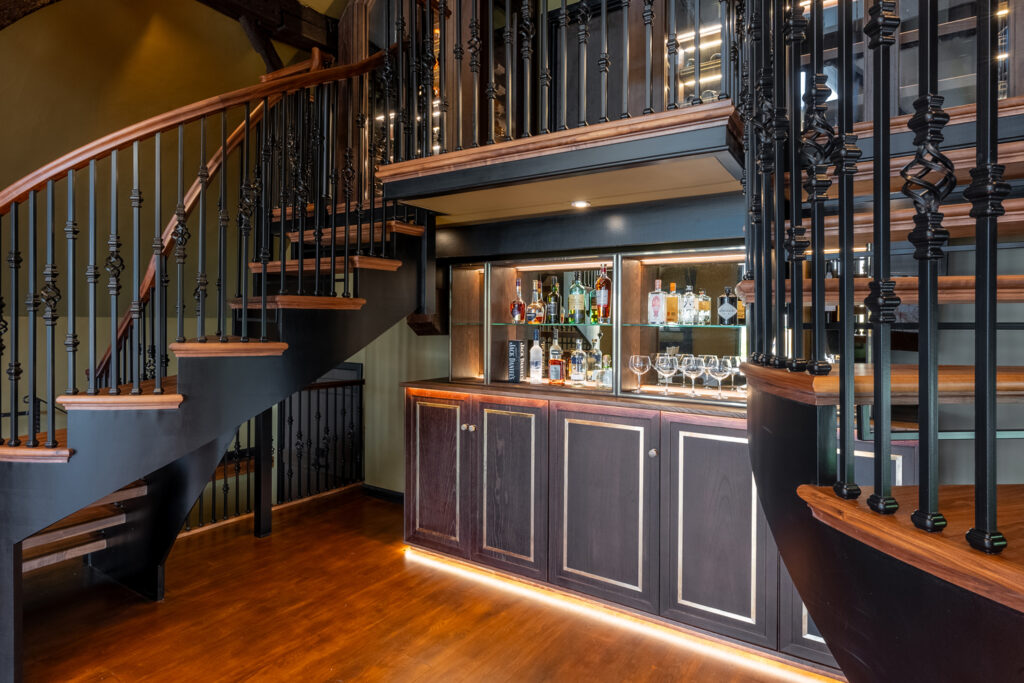
In the lower home bar, shelving was introduced in place of traditional wine racking at the client’s request, to provide a dedicated space for displaying spirits. The display shelving ensures easy access to spirits and wine accessories, keeping everything within reach for entertaining. The use of glass shelving provides a deliberate contrast against the darker oak joinery, adding a sense of lightness and enhancing the reflective quality of the mirror backing behind the bar.
In this project, the angled scallop racking was designed as a visual feature to complement the wider scheme. Where Sorrells typically uses solid oak for this style of racking, we opted for bronze rods to harmonise with the bronze inlay, ironmongery, and other detailing throughout the bar and wine wall. The angled scallop configuration allows each bottle to be displayed label-forward while enabling efficient storage of up to three bottles deep per row.
The temperature control system plays an essential role in this installation. A discreet ceiling-mounted, water-cooled unit is integrated into the upper level cabinetry, maintaining optimal conditions for long-term fine wine storage. While the lower level of this project is designed for socialising and display, the upper level provides a dedicated environment for proper storage, preserving wine at a consistent temperature and humidity. The cooling system is carefully concealed to ensure it does not disrupt the clean lines and cohesive design, delivering both function and an unobtrusive aesthetic.
The design features dark hues to complement the property’s existing interior and exposed beams. As a striking yet neutral contrast, bronze detailing has been used throughout the installation to add refinement without overpowering the space. A notable feature is the bronze inlay detailing on the cabinetry doors and plinths, providing subtle highlights that draw the eye while maintaining overall cohesion. Bronze has also been used for the door handles and ironmongery, introducing consistent, understated touches that tie the entire scheme together.
In the lower home bar, shelving was introduced in place of traditional wine racking at the client’s request, to provide a dedicated space for displaying spirits. The display shelving ensures easy access to spirits and wine accessories, keeping everything within reach for entertaining. The use of glass shelving provides a deliberate contrast against the darker oak joinery, adding a sense of lightness and enhancing the reflective quality of the mirror backing behind the bar.
The design was carefully developed to sit comfortably within the parameters of this listed property. The room’s irregular geometry, exposed beams, and structural constraints required bespoke solutions to ensure the cabinetry integrated precisely with the existing fabric of the building.
The layout creates two distinct areas for separate purposes: a working space below, designed as a functional home bar with cabinetry, glass shelving and a mirrored backdrop for displaying and accessing spirits and accessories; and a dedicated storage space above, providing temperature-controlled wine cabinets with angled bronze rod racking for efficient bottle storage and presentation.
The relationship between the cabinetry and the staircase was a key consideration from the outset. We worked closely with the staircase designer to ensure alignment between joinery details and architectural features, resulting in a unified, proportionally balanced installation that enhances the double-height space.
Material selection and finishes were colour-matched to the surrounding timbers to maintain consistency with the building’s character, while refined detailing in bronze, including inlays, ironmongery, rods and handles, provided a subtle contrast that ties both levels together without disrupting the overall aesthetic.