
When most people hear the words “wine cellar,” their mind immediately conjures up images of vast underground chambers, rows of oak barrels, or cavernous spaces lined with hundreds of bottles. And while that romantic image still holds true for some estates, the reality today is far more accessible — and far more versatile.
The truth is: you don’t need a big house to enjoy the luxury of a wine cellar. In fact, thanks to modern materials, technology, and design ingenuity, wine storage can be integrated into homes of all shapes and sizes — from compact city flats to suburban terraces.
At its core, a wine cellar isn’t defined by its size — it’s defined by its function. A wine cellar is simply a space designed to store wine in optimal conditions. That means controlling:
Temperature: Ideally between 12°C and 14°C
Humidity: Typically 55–75%, to prevent corks from drying out
Light: Wines, especially reds, should be kept away from direct sunlight
Vibration: Constant movement can disturb the ageing process
Ventilation: Helps prevent musty odours or mould
If a space meets those criteria, it’s a wine cellar — whether it’s a basement, a cupboard, or even a cleverly converted kitchen unit.
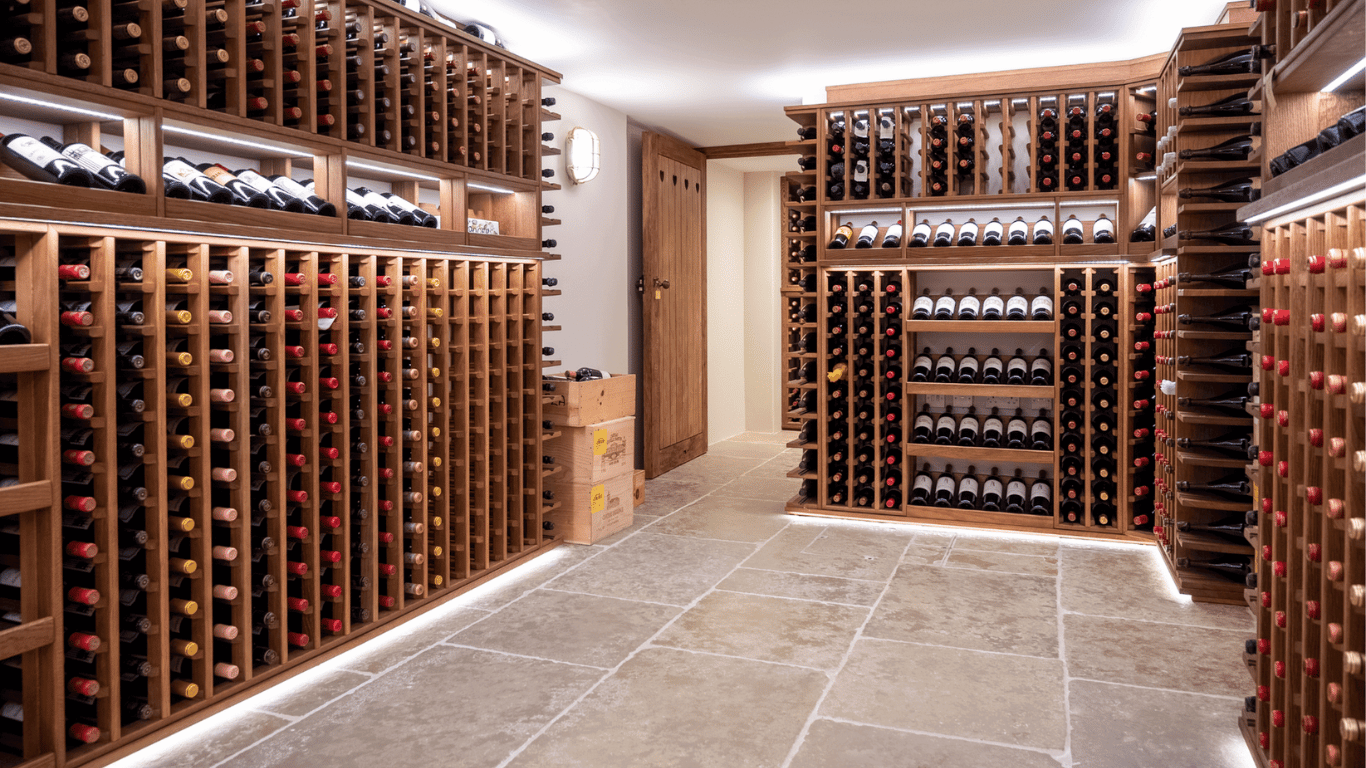
With clever planning and the right equipment, even the most modest homes can accommodate a stylish and functional wine storage area.
That often-overlooked triangular space beneath your staircase? It’s a perfect candidate for a wine cellar conversion. With some insulation, temperature control, and custom shelving, it can become a beautiful and functional focal point.
These are becoming increasingly popular in contemporary kitchens and dining areas. They can be designed with double-glazed, UV-filtering glass doors, integrated lighting, and smart climate control systems. Some units combine refrigeration and ambient shelving for serving and ageing in one place.
Have a utility room or larder? A small corner can be transformed into a wine nook with the right racking system and a freestanding wine fridge. You can start small — even storing 20 to 30 bottles efficiently — and scale up over time.
For those with minimal space, a built-in wine fridge under the kitchen counter or island is a seamless and efficient solution. Today’s models offer precise climate control, dual zones (for reds and whites), and stylish finishes to match your decor.
If you have an external building or insulated garage, these can also be transformed into beautiful wine spaces — and you don’t have to sacrifice room inside your home.
Wine cellars are no longer just about prestige. They’re about enhancing your lifestyle. If you enjoy hosting, collecting, or simply love a glass of wine with dinner, proper storage helps protect your investment and elevate your experience.
Even if you only keep a dozen or so bottles on hand, storing them well makes a noticeable difference in taste and longevity — especially for more delicate or age-worthy wines.